Chanukah Questions and Answers
Why is it called Chanukah? Why eight days and not seven, or nine? Why dreidel, gelt and cheese? Short answers to the classic Chanukah questions, from the sources.
On this page
- Why is it called Chanukah?
- Why does it begin on the 25th of Kislev?
- The oil was enough for one day. Why is Chanukah eight days and not seven?
- Every other festival has an extra day outside Israel. Why isn’t Chanukah nine days?
- Why was Chanukah declared only a year later, while Purim was declared at once?
- Why is there no festive meal on Chanukah, as there is on Purim?
- Why is the shamash needed?
- Why do we light from left to right?
- How many lights are lit over all of Chanukah?
- Why do children play dreidel?
- Why are cheese and dairy foods eaten?
- Why is Chanukah gelt given?
- Why don’t women work while the lights burn?
- Can I use the light of the Chanukah candles to read?
- A personal question?
Why is it called Chanukah?
Chanukah means “dedication.” After the victory, the Beis Hamikdash was purified and a new altar was dedicated, replacing the one the Greeks had used for idol worship. The Sages also read the name as two words, chanu kaf-hei, “they rested on the twenty-fifth,” the 25th of Kislev, when the fighting ended. Vedibarta Bam brings a third reading: the letters stand for “eight lights, and the law follows Beis Hillel,” who taught that we add a light each night.
Why does it begin on the 25th of Kislev?
According to the Midrash, the Mishkan in the desert was finished on the 25th of Kislev, but its dedication was held over until Nissan. The day was “compensated” centuries later, when the Beis Hamikdash was rededicated on that date. Living With Moshiach adds that or, “light,” is the twenty-fifth word of the Torah.
The oil was enough for one day. Why is Chanukah eight days and not seven?
This is the famous question of the Beis Yosef. Among his answers: the Maccabees divided the oil into eight small portions and each burned all night; or the jug stayed full after every filling; or the cups were still full in the morning, so there was a miracle on the first night as well. Others say the first day celebrates the victory, or that finding the pure jug at all was itself a miracle. The page on the miracle of the oil goes through these answers.
Every other festival has an extra day outside Israel. Why isn’t Chanukah nine days?
The extra day of the Torah’s festivals comes from doubt over which day the court in Yerushalayim declared the new month. Vedibarta Bam explains that Chanukah, a festival established by the Sages, did not get the same stringency; and in any case, by the 25th of the month the messengers had reached even the furthest communities. There is an opinion that in early times distant communities did keep nine days, and that when the new month is again declared by witnesses in the time of the Beis Hamikdash, they may do so again.
Why was Chanukah declared only a year later, while Purim was declared at once?
Vedibarta Bam brings two answers. Unlike Purim, the war of Chanukah went on for years and cost many lives, and the Sages waited until families had finished mourning. And the Rambam notes that the victory returned Jewish rule to Israel; only after a year, when the kingdom stood firm, was the deliverance complete enough for Hallel.
Why is there no festive meal on Chanukah, as there is on Purim?
Haman wanted to destroy Jewish bodies, so Purim is celebrated with the body, by eating and drinking. The Greeks wanted to destroy the Jewish soul, so Chanukah is celebrated in spiritual ways: lighting, Hallel and thanksgiving. Even so, it is a custom to add festive meals during Chanukah, with songs and words of praise for the miracles.
Why is the shamash needed?
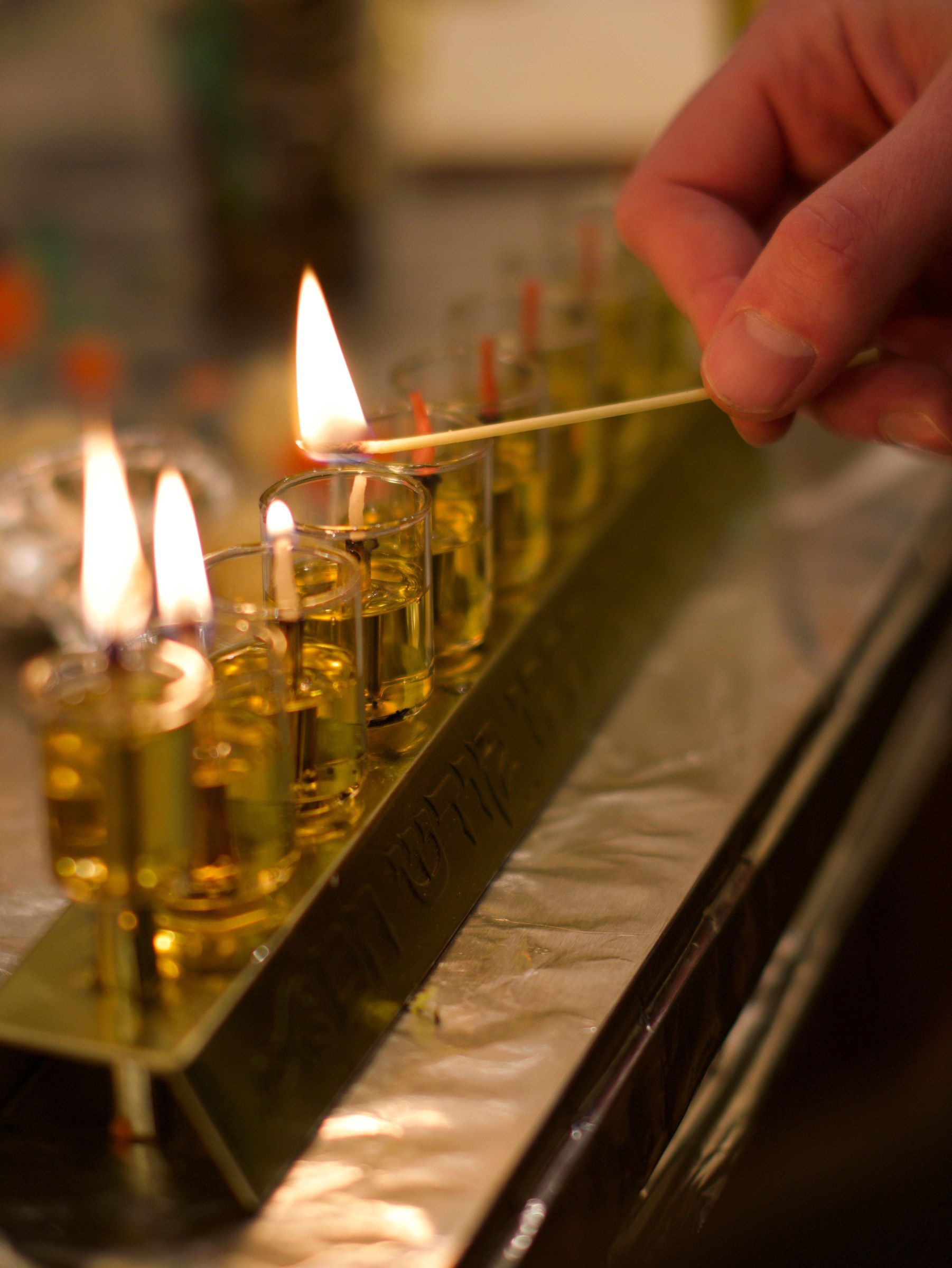
The Chanukah lights are holy and may not be used for any purpose, not even to light other candles. The shamash, the “servant” light, is used to light them and gives light of its own. HaGeula adds that it recalls the priest who lit the menorah in the Beis Hamikdash. It stands apart and higher, so that no one counts it as one of the night’s lights.
Why do we light from left to right?
The first light is placed on the right, the more important side. Each night the new light is added to its left and lit first, because the newest light shows the miracle growing. So the right-hand light is always lit last.
How many lights are lit over all of Chanukah?
Thirty-six, not counting the shamash. Vedibarta Bam connects the number with the hidden light of Creation, which served Adam for thirty-six hours and is reserved for the days of Moshiach, and with the thirty-six tractates of the Babylonian Talmud, the Oral Torah the Greeks tried to make the Jews forget.
Why do children play dreidel?
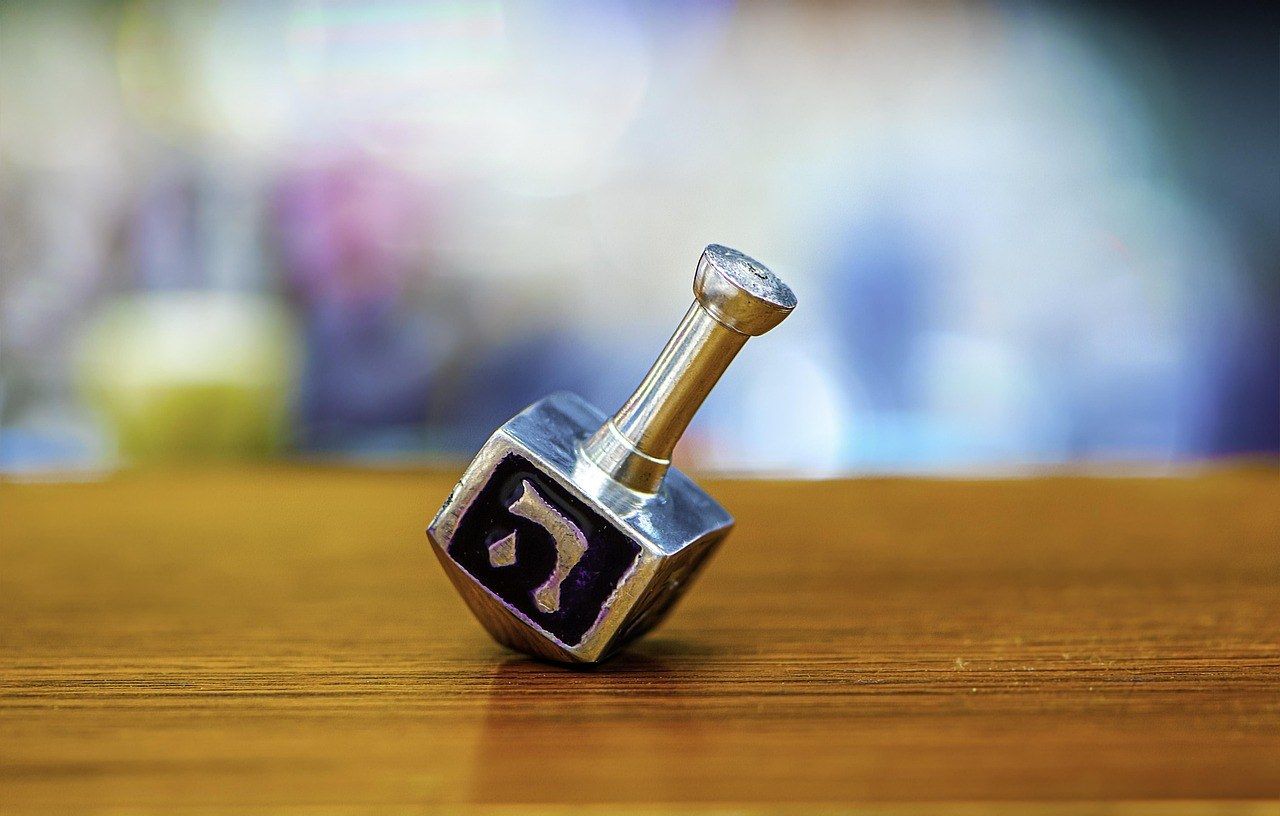
When Torah study was forbidden, children learned in secret, and when Greek patrols came near they hid their scrolls and took out their spinning tops. The letters nun, gimmel, hei, shin stand for nes gadol hayah sham, “a great miracle happened there”; in the land of Israel the dreidel has pei, for poh, “here.” Their numerical value is 358, the same as Moshiach. L’Chaim adds a thought: the dreidel is spun from above, as the miracle of Chanukah came from above nature, while the Purim gragger is turned from below.
Why are cheese and dairy foods eaten?
In memory of Yehudis, who fed the enemy general salty cheese and wine and saved her town. Fried foods recall the miracle of the oil.
Why is Chanukah gelt given?
Chanukah shares a root with chinuch, education. The custom of the Rebbeim is to give children money on Chanukah to add to their joy, to reward their learning, and to give them something to share with tzedakah.
Why don’t women work while the lights burn?
It is a custom for women not to do household work while the lights are burning, in honour of the women who had a central part in the miracle.
Can I use the light of the Chanukah candles to read?
No. The lights are only for looking at, as Haneiros Halalu says. Keep another lamp on in the room.
A personal question?
The answers here are general. For a question about your own situation, ask your local Chabad rabbi, or send it to asktherav.com.
For a question about your own home or situation, ask your local Chabad rabbi, or write to AskTheRav.
Sources
- Rabbi Moshe Bogomilsky, Sichos in English, Vedibarta Bam: The Gemara's Account.
- Rabbi Moshe Bogomilsky, Sichos in English, Vedibarta Bam: Dinim, Menorah Lighting.
- HaGeula, שאלות ותשובות על חג החנוכה.
- Sichos in English / L'Chaim, Chanukah: The Dreidel and The Gragger.
Based on Vedibarta Bam by Rabbi Moshe Bogomilsky and HaGeula.
More on questions and answers
What Is Chanukah?
Chanukah is the eight-day festival of lights that begins on the 25th of Kislev, recalling the Maccabees' victory and the miracle of the oil in the Beis Hamikdash.
The Miracle of the Oil
One sealed jug of pure olive oil, enough for a single day, kept the menorah of the Beis Hamikdash burning for eight days. What the Talmud says, and how the commentators explain it.
How to Light the Menorah
A step-by-step guide to lighting the Chanukah menorah: what you need, where to place it, when to light, the blessings, the order of the lights, and Friday and Saturday night.
The Dreidel
The four-sided Chanukah top: how to play, what the letters mean, where the custom comes from, and its hints of Moshiach.
Chanukah Gelt
The custom of giving children money on Chanukah: its reasons, when and how the Rebbe encouraged giving it, coins or notes, tzedakah, and the Shabbos dates this year.