Lighting Away from Home
Guests, travellers, students and Chanukah parties: where to light when you are not at home, how to plan a trip around the lights, and what to do on a plane or in a hotel.
On this page
The Chanukah lights belong to a home. The mitzvah is to light where you live, and the halacha treats as your home the place where you are sleeping that night. Most questions about lighting away from home come down to that.
Plan ahead
There is a halachic debate whether a traveller must rent a room just to have somewhere to light, and the consensus is that he need not. But no one should put himself in a position where the lights are missed. If you are travelling, arrange your schedule so that you can light yourself, at the proper time, where you are staying. It is a far greater mitzvah to light yourself than to have someone light for you. Some authorities even say that someone holding tickets for a trip that would prevent lighting should cancel them, at a loss; in practice, ask a rabbi.
Guests
- A guest sleeping over should light where he is staying. If his wife or family is lighting at home, he is included in their lighting by the letter of the law, but the common and best practice is for every adult man to light his own menorah where he sleeps, with the blessings, since for that night it is his home.
- A guest who eats with the host is part of the household and is included in the host’s lighting. A guest who only sleeps there can join by giving the host a small sum toward the oil, and the host adds a little extra for him.
- Eating out, sleeping at home: if you go to friends or family for a meal, go home to light. The Taz compares lighting in a place where one only eats a meal to lighting in the street. Someone who lit by mistake where he was only eating lights again when he gets home (without Shehecheyanu if it was the first night).
- Leaving right after lighting: if you light in a place and then leave for somewhere else for the night, with no intention to return, it is very doubtful that you have fulfilled the mitzvah.
- Shabbos guests light where they are staying for Shabbos. On Saturday night, a guest may light at his host’s and stay half an hour before leaving.
Travellers
- If you will be home late at night, even after midnight, the best option is to light at home when you arrive, as long as someone in the household is awake to see it.
- If you cannot arrange to light at home or where you are staying, you may light before leaving, from plag haminchah, provided family members will be at home after sunset; or light when you arrive, even after midnight, with the blessings if you are alone or someone in the household is awake.
- If you will be travelling all night, you may light in the vehicle, where it is safe and legal. On a plane, where an open flame is not allowed, switch on an electric menorah without a blessing.
- An airport or a rest stop is not a home. The obligation cannot be fulfilled there.
- A hotel room counts as your home for the night. If the door has no mezuzah, place the menorah to the right of the doorway, and only where open flames are permitted.
Students
- Yeshiva students light at the entrance to their dorm rooms, observing every fire-safety rule.
- Seminary girls studying away from home fulfil the mitzvah where they now live. One girl may light for all of them, with everyone sharing in the oil or using the school’s; if possible a different girl lights each night.
- Singles living on their own light in their own home.
Chanukah parties
Hosts of Chanukah parties should choose a time and place that lets the guests light at the right time in their own homes. It is best not to schedule parties from half an hour before sunset until after nightfall; guests who are not sleeping over cannot fulfil the mitzvah by lighting at the party. It is also forbidden to sit down to a meal in the half hour before the time for lighting.
In hospital
Where an open flame is not permitted, an electric menorah set aside for Chanukah, with incandescent bulbs, may be switched on without a blessing. A patient confined to bed may light and say the blessings where he is, and the menorah may then be moved a short distance to its place.
If you will not light at all
Someone who will not light, and is not included in anyone else’s lighting, says she’asah nissim on seeing Chanukah lights (and Shehecheyanu the first time). Someone in a place with no Jews and no menorah in sight should light with a blessing, even if his family is lighting at home, because there is an obligation to see the lights.
Travel questions have many details. Ask your local Chabad rabbi or asktherav.com before your trip.
For a question about your own home or situation, ask your local Chabad rabbi, or write to AskTheRav.
Sources
- AskTheRav, Article: Chanukah for Partiers and Travelers.
- Rabbi Yosef Yeshaya Braun, Badatz of Crown Heights, Day-to-Day Halachic Guide: Chanukah 5786.
- Shulchan Aruch HaRav (shulchanaruchharav.com), Chanukah Halacha, Chapter 3: The Chanukah candles.
Based on AskTheRav and the Badatz of Crown Heights guide.
More on lighting the menorah
Who Should Light the Menorah?
Men and women are equally obligated in the Chanukah lights. Who lights in each household, the Chabad custom for women and girls, children's menorahs, and the whole family gathered around.
When to Light the Menorah
The right time to light the Chanukah menorah, the earliest and latest times, what to do if you are late, Friday and Saturday night, and this year's nights and dates.
Where to Place the Menorah
Doorway or window, left side or right, how high and which room: where the Chanukah menorah goes, with the halacha, the general custom and the Chabad custom.
Shabbos Chanukah
Lighting the menorah before Shabbos on Friday and after Havdalah on Saturday night, the menorah during Shabbos, prayers and Torah readings, dreidel and gelt on Shabbos, and this year's two Shabbosos of Chanukah.
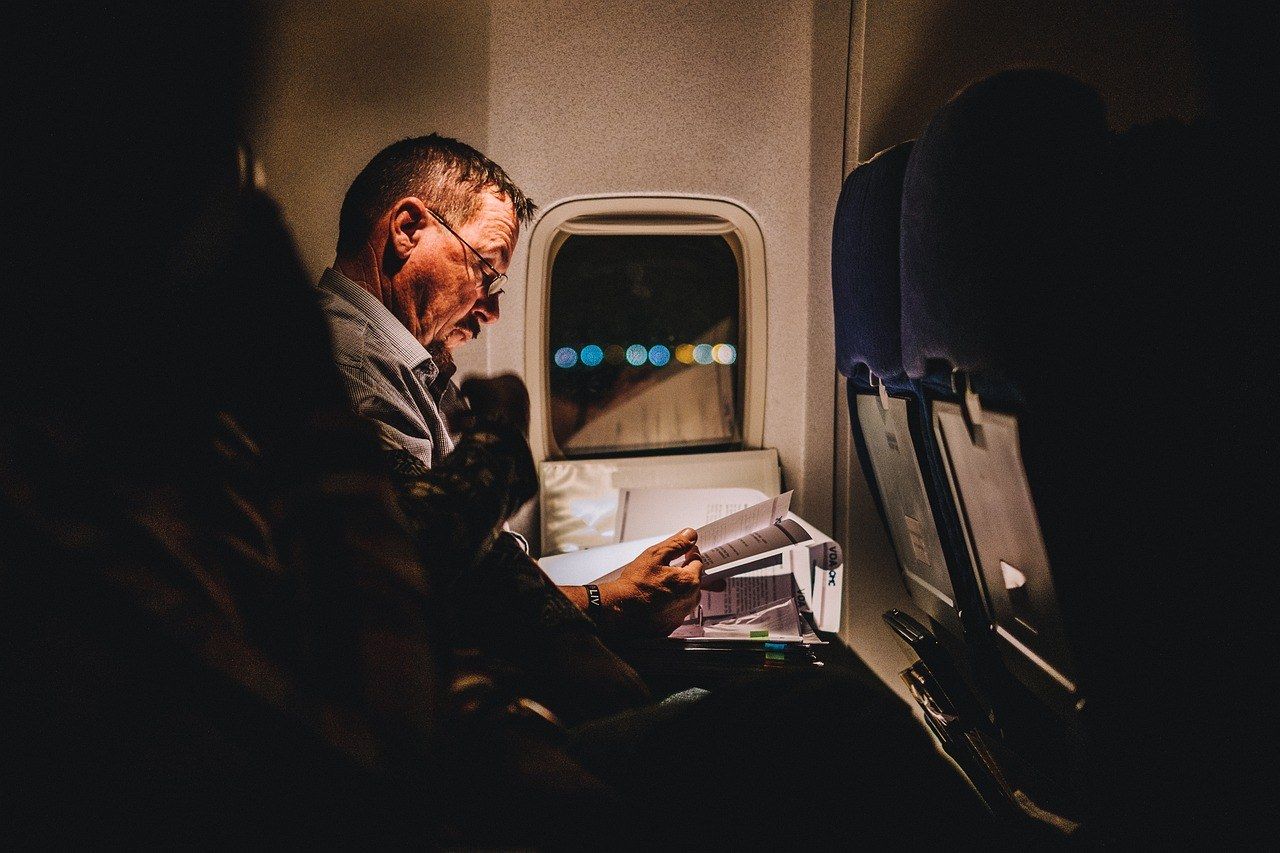
Chanukah Lights at 30,000 Feet
Musician Avi Piamenta misses his flight to a Chanukah concert in Melbourne, spends Shabbos Chanukah in Hong Kong airport, and asks an airline captain for something no one is allowed to do on a plane.