Where to Place the Menorah
Doorway or window, left side or right, how high and which room: where the Chanukah menorah goes, with the halacha, the general custom and the Chabad custom.
On this page
The Chanukah lights exist to publicize the miracle, so where they stand is part of the mitzvah itself. The Sages placed them at the entrance of the house, in view of the street, at the hour when people were coming home.
Outside, inside and the window
Halacha: originally the menorah was lit outside, at the door of the house facing the street. Where this became dangerous, people moved it indoors, and that is now the general practice almost everywhere.
General custom: many families who light indoors put the menorah in a window facing the street, so that passers-by can see it. Some authorities prefer this to an inside doorway when a window facing the public is available. A menorah in the window should be visible inside the home too, and one without a backsplash will not block the view. A window more than twenty amos (about thirty feet) above the street does not serve the purpose of being seen from it.
Chabad custom: the menorah is lit inside, in the doorway of a room, not on a windowsill. The Badatz of Crown Heights records that this was the custom of the Chabad Rebbeim, even though a ground-floor window would be more visible from outside. Rabbi Yaakov Goldstein’s Shulchan Aruch HaRav guide writes that one should not depart from this custom.
Sources sometimes put it more loosely: Living With Moshiach and L’Chaim mention both the doorway and the window. The Chabad sources on the halacha are clear that the Chabad practice is the doorway.
Which side of the door
- Halacha: the lights stand within a tefach (handbreadth, about three inches) of the doorway, on the left side, opposite the mezuzah on the right. Whoever walks through is then surrounded by two mitzvos.
- If the doorway has no mezuzah, the menorah goes on the right. Rabbi Goldstein leaves open whether this applies also to a doorway that needs a mezuzah but lacks one; the Badatz applies it to both.
- If you placed it on the right by mistake, you have still fulfilled the mitzvah.
Chabad custom in the doorway
The menorah stands within the actual space of the doorway, against the left doorpost, on a chair or something similar. The Chabad custom does not care which direction the branches face, whether east to west or north to south, unlike the menorah in shul, which is set east to west like the menorah in the Beis Hamikdash. Halachic authorities differ on whether the menorah should stand along the doorway or across it.
How high
- The lights should be at least three tefachim (about ten inches) above the floor and, as a mitzvah, not higher than ten tefachim (about thirty-one inches).
- Lights above ten tefachim still fulfil the mitzvah. Lights above twenty amos (about thirty feet) do not, and must be relit.
- Chabad custom is not particular about the exact height within this range.
- To keep the flames away from small children, a higher place is permitted. Safety comes first.
- A tall menorah may stand on a low stool or a tray rather than directly on the floor.
Which room
Light in a room where the family eats and spends time, so that everyone can gather. When there are several doorways, some prefer one visible from outside. A child lighting his own menorah should, if it can be done safely, light at the door of his own bedroom, as the Rebbe Melech HaMoshiach encouraged: the child’s room becomes a small sanctuary, a mikdash me’at.
Several menorahs in one home
When several people light, it is better that each menorah stand in its own place, even away from the doorway, than that they all crowd together so that no one can tell how many lights each has. Each needs its own shamash.
Away from drafts and danger
Choose a spot where a sudden draught will not blow out the lights, away from curtains, coats and anything flammable. A lit menorah should never be left unattended.
Questions
I live in an apartment building. Can I light at the window? If your custom is the window, and the window is not too high above the street, yes. Chabad custom is to light by an inside doorway regardless.
The menorah is blocking the doorway. May I move it after lighting? After the required time, yes. Before then, move it only for safety, as little as possible.
I am in a hotel room. See Lighting Away from Home. Where there is no mezuzah, place the menorah on the right of the door, and only where fire is permitted.
For your own home, ask your local Chabad rabbi or asktherav.com.
For a question about your own home or situation, ask your local Chabad rabbi, or write to AskTheRav.
Sources
- Shulchan Aruch HaRav (shulchanaruchharav.com), Chanukah Halacha, Chapter 3: The Chanukah candles.
- Rabbi Yosef Yeshaya Braun, Badatz of Crown Heights, Day-to-Day Halachic Guide: Chanukah 5786.
- Sichos in English, Chanukah: Customs (from Sefer HaMinhagim).
- Rabbi Moshe Bogomilsky, Sichos in English, Vedibarta Bam: Dinim, Menorah Lighting.
- Rabbi Y.Y. Shagalov, Living With Moshiach, Your Chanukah Guide (Living With Moshiach, Vayeishev 5760).
- Sichos in English / L'Chaim, Chanukah: How to Celebrate Chanukah.
- HaGeula, כך מדליקים את נרות החנוכה, הסדר והברכות.
Based on Rabbi Yaakov Goldstein's Shulchan Aruch HaRav guides, the Badatz of Crown Heights guide and Sefer HaMinhagim.
More on the menorah
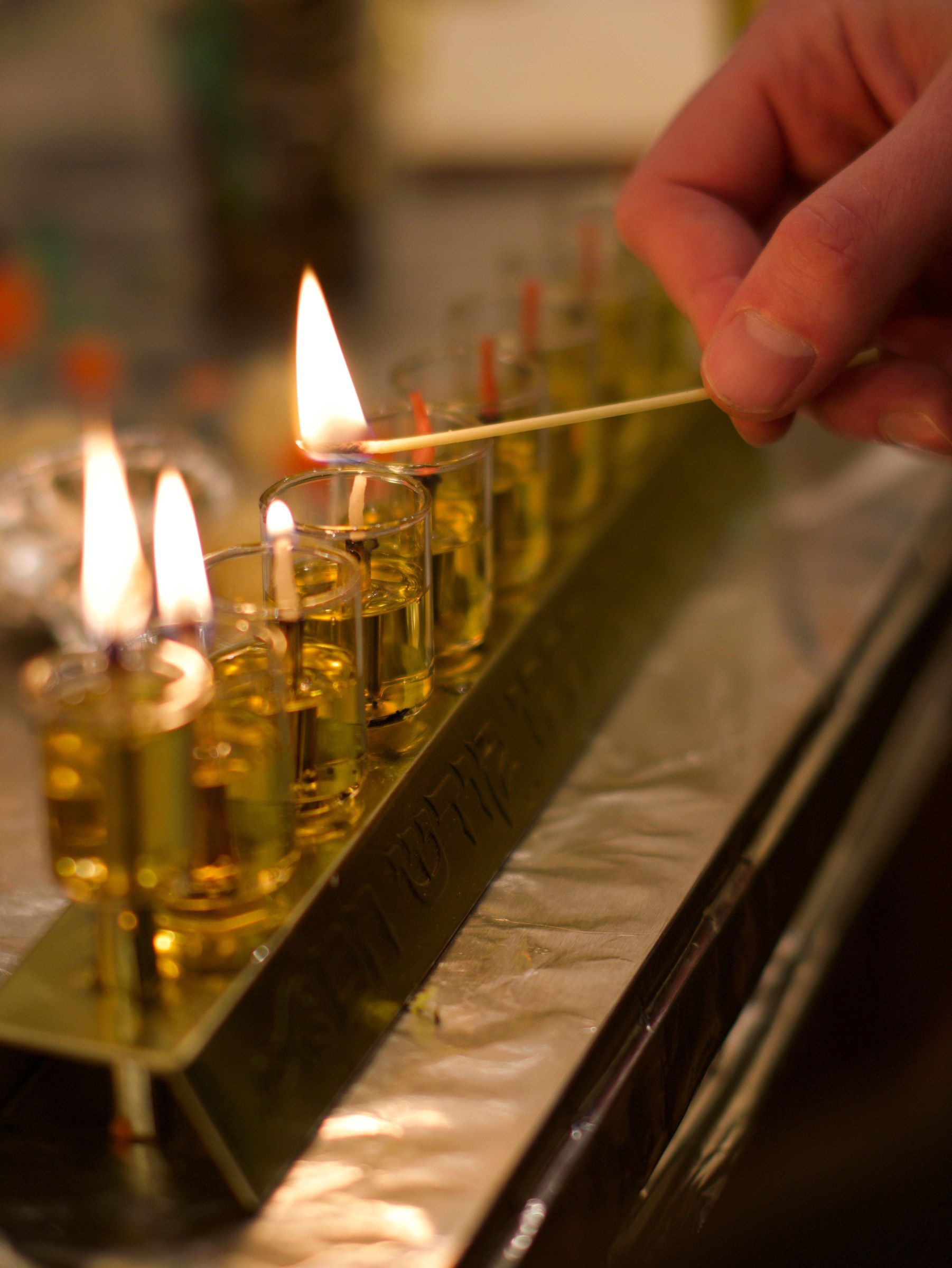
How to Light the Menorah
A step-by-step guide to lighting the Chanukah menorah: what you need, where to place it, when to light, the blessings, the order of the lights, and Friday and Saturday night.
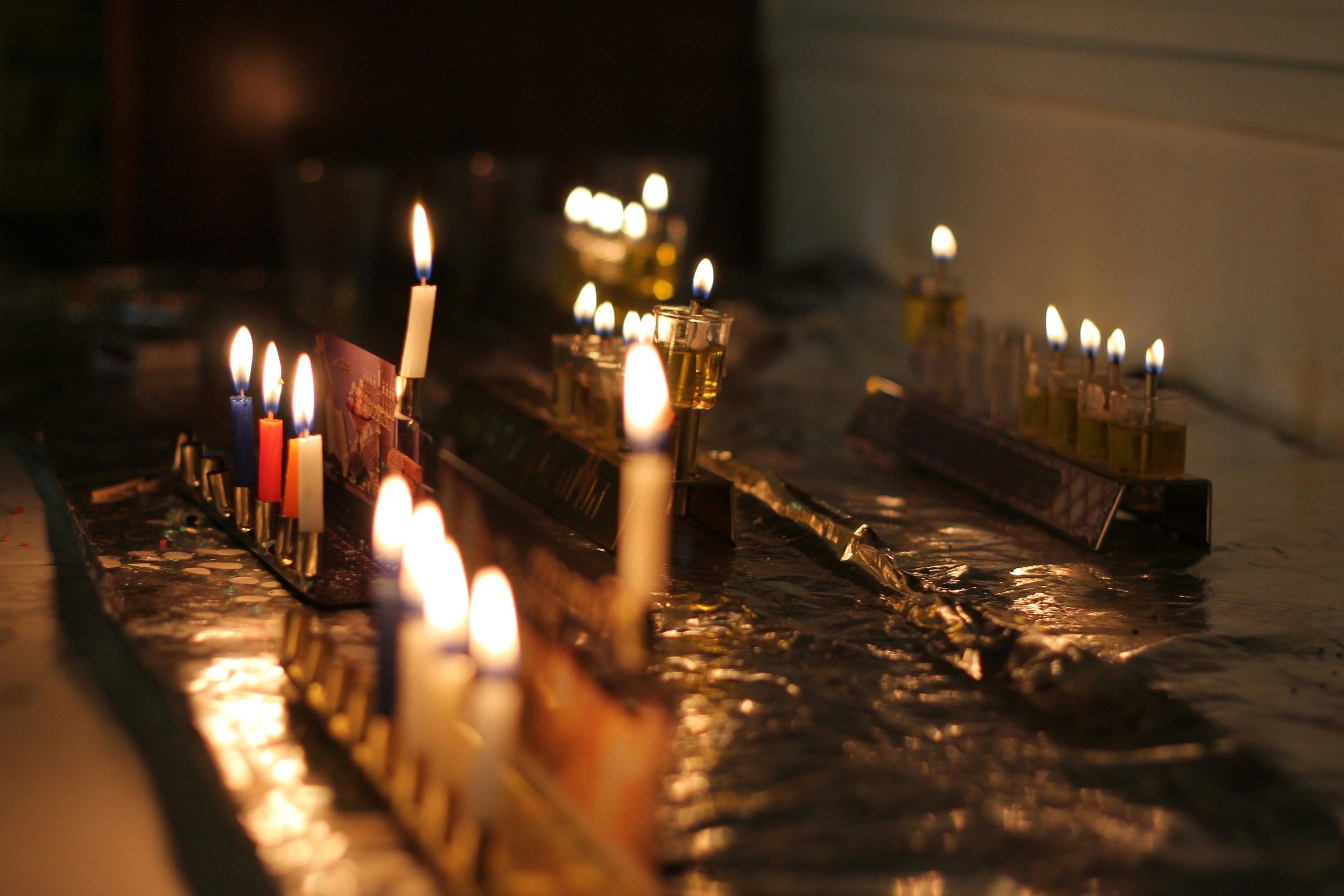
Choosing a Menorah
What makes a Chanukah menorah kosher and beautiful: lights in a straight row at one height, a shamash set apart, good materials, and why the Rebbe encouraged straight diagonal branches.
Who Should Light the Menorah?
Men and women are equally obligated in the Chanukah lights. Who lights in each household, the Chabad custom for women and girls, children's menorahs, and the whole family gathered around.
Lighting Away from Home
Guests, travellers, students and Chanukah parties: where to light when you are not at home, how to plan a trip around the lights, and what to do on a plane or in a hotel.
The Meaning of the Chanukah Lights
The Previous Rebbe told his Chassidim to listen to what the candles are saying. The Rebbe reads their message in the laws of the mitzvah: light the dark outside, use none of it, and add more every night.
Sichos in English