The Meaning of the Chanukah Lights
The Previous Rebbe told his Chassidim to listen to what the candles are saying. The Rebbe reads their message in the laws of the mitzvah: light the dark outside, use none of it, and add more every night.
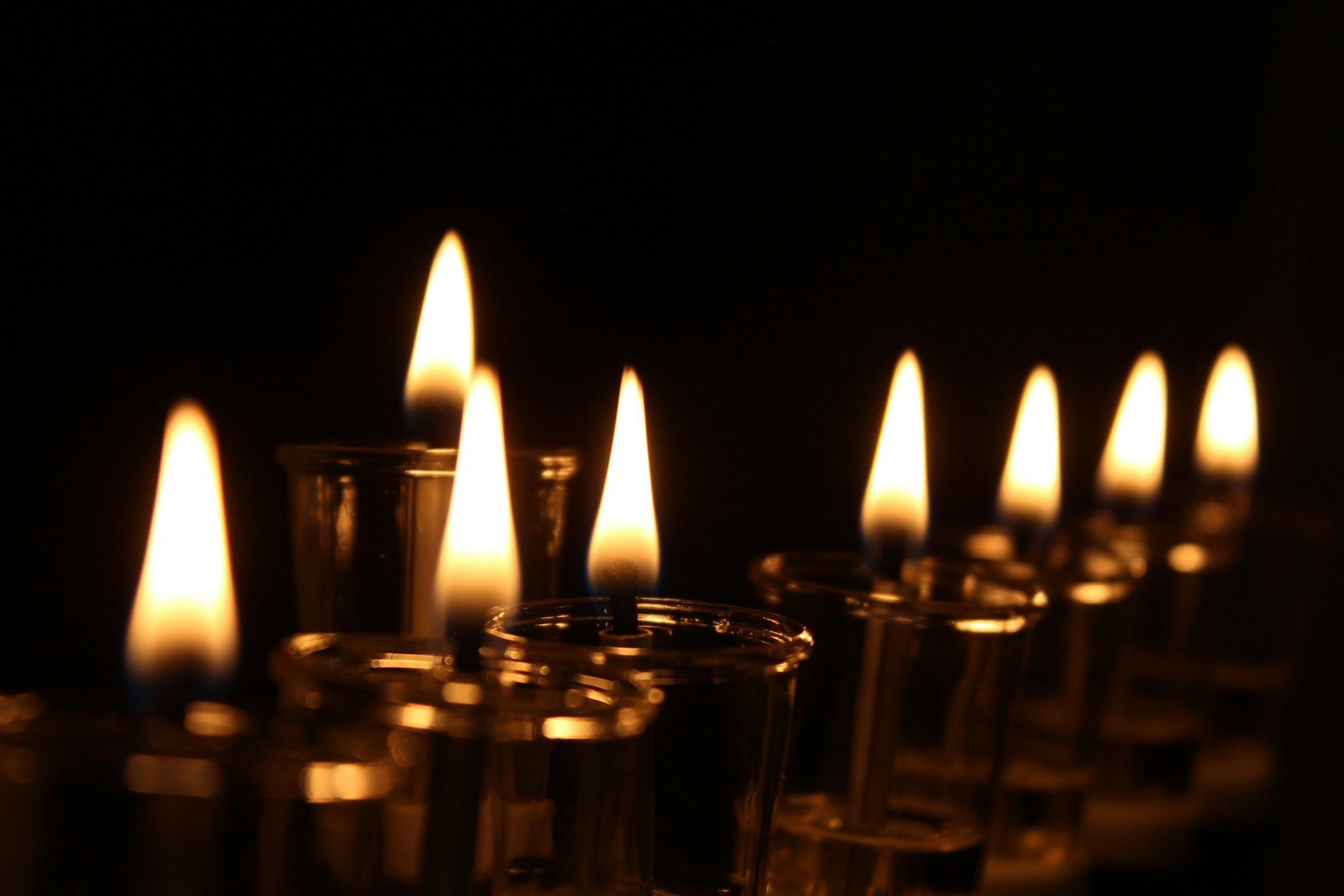
On Chanukah, the Previous Rebbe, Rabbi Yosef Yitzchak Schneersohn, would tell his Chassidim: “We must listen carefully to what the candles are saying.”1
Every mitzvah gives light, for “a mitzvah is a lamp and Torah is light.”2 Each one brightens the darkness of the physical world, but in most mitzvos that light cannot be seen. In the mitzvos done with an actual flame, it is plain to see. The Rebbe Melech HaMoshiach shows that the message of the Chanukah lights is written in the laws of the mitzvah itself, and that it reaches into every part of a Jew’s service of G-d through the year.
Light for the outside
The Chanukah lights are lit after sunset and must burn into the night.3 They are placed “at the outside of the entrance to one’s home,”4 which shows that they are meant first of all to light up the public domain, not one’s own house.
Night and the public street stand for those parts of material life that hide G-dliness and make it hard to see that G-d is everywhere. The Chanukah lights shine into exactly those places and lift them up.
No other mitzvah does this so directly. The positive commandments work only with things that are fit to be elevated, which is why a mitzvah cannot be done with something that is not kosher.5 The prohibitions deal with what cannot be refined, and they only hold it back; they do not raise it. The Chanukah lights go further. They take the darkness of the public domain and make it glow with G-dly light.
That power comes from the miracle they recall. Chanukah happened in a dark time. The Greeks ruled the Land of Israel and pressed their culture on its people, and many Jews were drawn after it. The Maccabees awakened in the people mesirus nefesh, self-sacrifice, and teshuvah, return to G-d. They fought, won, and rededicated the Beis Hamikdash, the Holy Temple. Their victory turned darkness into light, and the lights that commemorate it have the same power.
The lesson is direct. When we meet darkness, we may not resign ourselves to it, and we may not be content with lighting up our own homes. We go out and spread light as far as we can, until the street outside shines too.
A light we may not use
The paragraph we sing after lighting, Haneiros Halalu, records another law: “These lights are holy, and we are not permitted to make use of them, only to look at them.”6 The lights burn into the night, just when their light would be useful, and still we may not use it. For this reason we light an extra candle, the shamash (the “helper”), and set it above the rest, so that any benefit we take by accident comes from the shamash and not from the lights of the mitzvah.7
Every mitzvah brings a reward, and the visible light of the Chanukah candles shows that this mitzvah’s effect is felt in the physical world as well as the spiritual one. Yet just as we do not use the light, we do not do this mitzvah for what it will bring us. We do it only because “You have sanctified us with Your commandments and commanded us,” with no thought of reward.
That is avodah lishmah, serving G-d for His own sake, the highest level a person can reach through his own efforts.8 Much of what people do, even in their service of G-d, is driven by the wish for some reward, if not a material one then a spiritual one. The Chanukah lights teach us to rise above that and serve G-d for His sake alone. And because they burn at night, they show that this is possible not only in “daylight,” when G-dliness is easy to see, but also when it takes real effort to turn the surrounding darkness into light.
The most beautiful way
The basic law could be kept by lighting a single light each night of Chanukah.9 Yet in every Jewish home the custom is to add one each night, the way of the mehadrin, “those who beautify the mitzvah,” who spare neither effort nor expense. There is a level higher still, mehadrin min hamehadrin, “the most careful of all,” and that is how Jews everywhere light today.10 Even in circles where other mitzvos are kept less carefully, this one is kept in the finest way.
We inherited that from the Maccabees. When they rededicated the Beis Hamikdash, Torah law would have let them light the golden Menorah with impure oil, since the requirement of purity, like that of the communal offerings, is set aside when there is no other choice.11 They would not settle for the minimum. They decided to light only with pure oil. Preparing new oil took eight days, so G-d stepped outside the natural order: one cruse with oil for a single day burned for eight. We remember that miracle by following their example and lighting in the most beautiful way.
A children’s version of this talk, published in Sichos in English, has a father pull his chairs up to the menorah and ask his children to “listen to what the candles are saying” before they run off to play dreidel. His younger son asks for a bonus in Chanukah gelt for helping his mother, and his older brother reminds him that the lights may not be used: we light them only because Hashem said so.
More light every night
Adding a light each night teaches that each day we must do more to spread light in the world. Last night we lit up our surroundings, even in the finest way, and still it is not enough for tonight. The Sages give this as the reason for the custom: in matters of holiness we always go up.12
From the second night, the first time a light is added, we keep adding for a full week. A week is a complete cycle of time that holds every situation a person can meet.13 Adding a light on each of those nights expresses, and strengthens, a commitment to keep growing whatever comes.
These lessons belong to every part of life. Each day should bring further growth and new chances to bring G-dly light into our homes and into the world. Lived this way, the Chanukah lights become a catalyst for the ultimate light of the Geulah, the Redemption.
The number eight binds them together: eight is the number of nights we light, and it is the number tied to the days of Moshiach.14 Our Chanukah lights look ahead to, and help bring about, the time when, in the words of a traditional blessing, “a priest will appear in Zion” and light the Menorah in the Beis Hamikdash. May it be in the immediate future.
Footnotes
-
Kuntres Baruch She’asah Nissim (Kehot, 5711). ↩
-
Mishlei (Proverbs) 6:23. ↩
-
See Shabbos 21b; Shulchan Aruch, Orach Chaim 672:1–2. ↩
-
Shabbos 21b. ↩
-
Shabbos 28b. ↩
-
Siddur Tehillat Hashem, p. 339. ↩
-
Shulchan Aruch, Orach Chaim 673:1. ↩
-
Rambam, Mishneh Torah, Hilchos Teshuvah 10:4–5. ↩
-
Shabbos 21b; Rambam, Hilchos Chanukah 4:1; Tur, Orach Chaim 671:2. ↩
-
Rema, Orach Chaim 671:2. ↩
-
Zevachim 22b; Rambam, Hilchos Bias HaMikdash 4:9. ↩
-
Shabbos 21b. ↩
-
See Sefer HaMaamarim 5678, p. 269ff.; 5704, p. 192ff. ↩
-
Arachin 13b; Or HaTorah on Chanukah, 326b ff. ↩
Sources
- Sichos in English, Chanukah: The Message of The Chanukah Lights.
- Sichos in English, Chanukah: Listening To The Candles.
Adapted from Sichos in English, based on Likkutei Sichos, vols. 1 and 5, and a talk of Shabbos Chanukah 5739.
Related
How to Light the Menorah
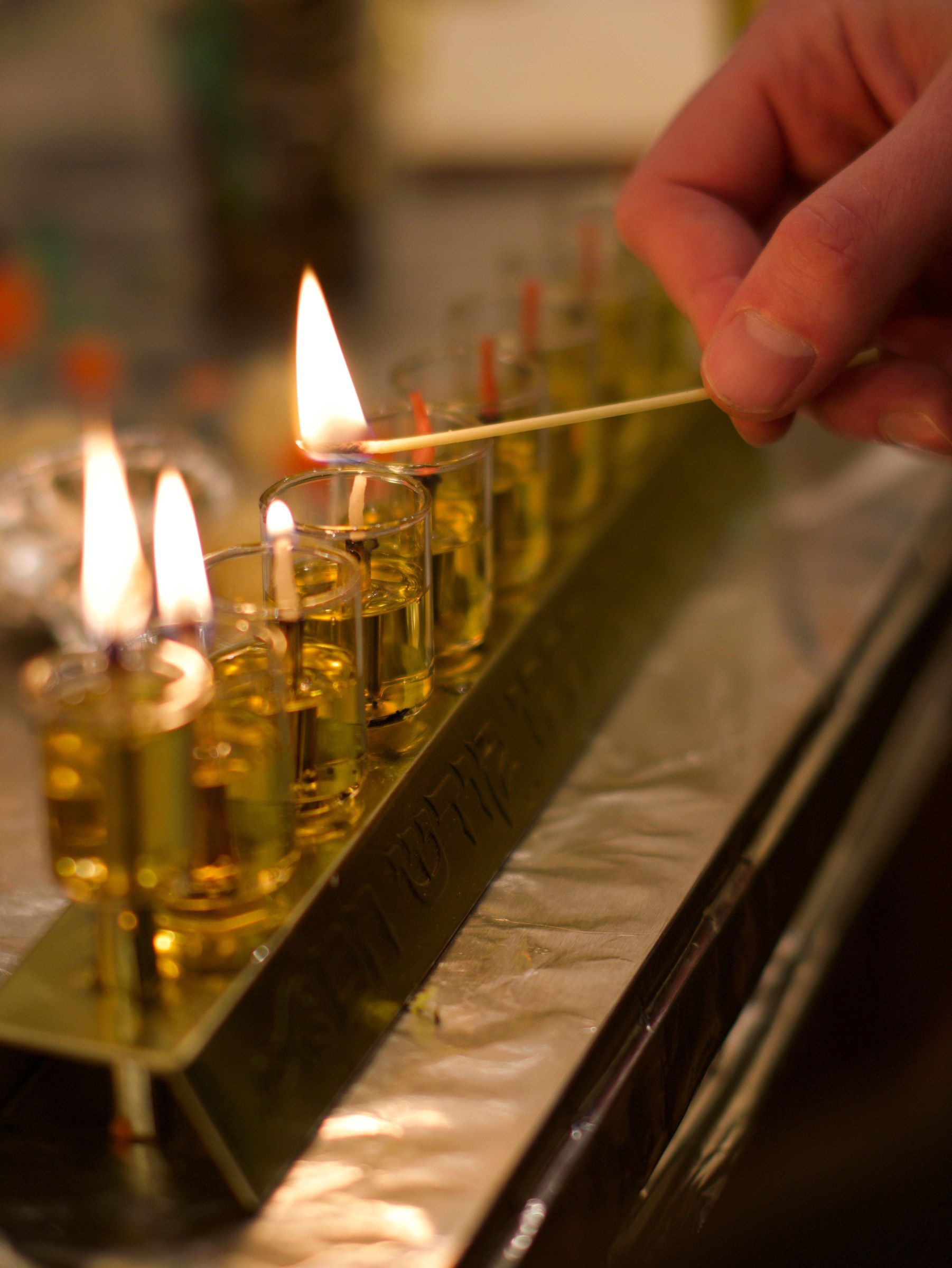
A step-by-step guide to lighting the Chanukah menorah: what you need, where to place it, when to light, the blessings, the order of the lights, and Friday and Saturday night.
Haneiros Halalu
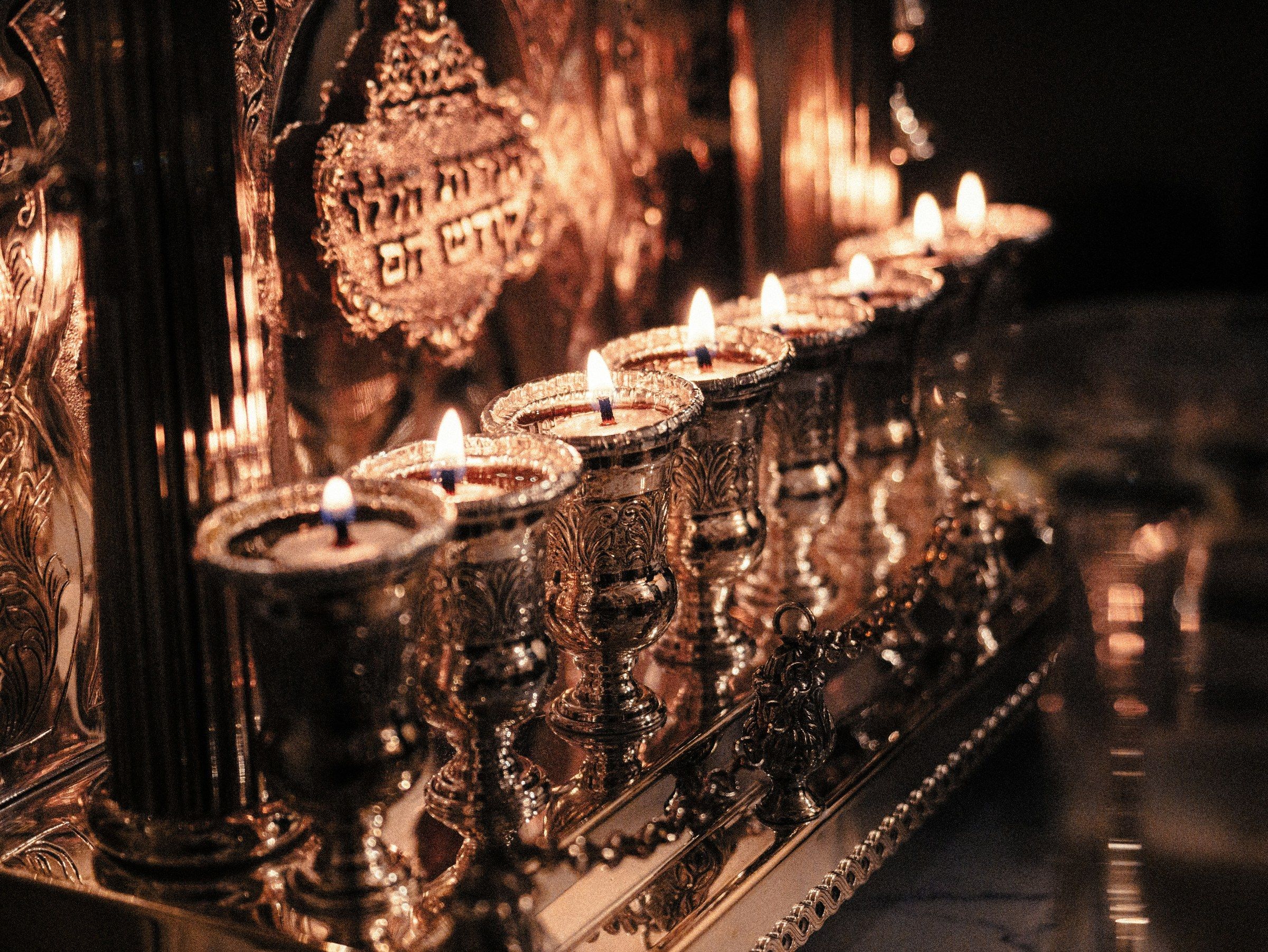
"These lights we kindle": the short declaration said after lighting the menorah, in Hebrew with transliteration and translation, when it is said, and the Chabad niggun sung to it.
Beis Shammai and Beis Hillel
Beis Shammai light eight lights on the first night and count down; Beis Hillel light one and count up. What each school sees in the miracle, and the Rebbe's analysis of the two reasons given for Beis Hillel.
Sichos in EnglishThe Secret of Chanukah
The decrees, the self-sacrifice and the miracles of Chanukah were all above reason. The Rebbe explains how that makes Chanukah a blueprint for Jewish life.
Sichos in EnglishWhere to Place the Menorah
Doorway or window, left side or right, how high and which room: where the Chanukah menorah goes, with the halacha, the general custom and the Chabad custom.