The Secret of Chanukah
The decrees, the self-sacrifice and the miracles of Chanukah were all above reason. The Rebbe explains how that makes Chanukah a blueprint for Jewish life.
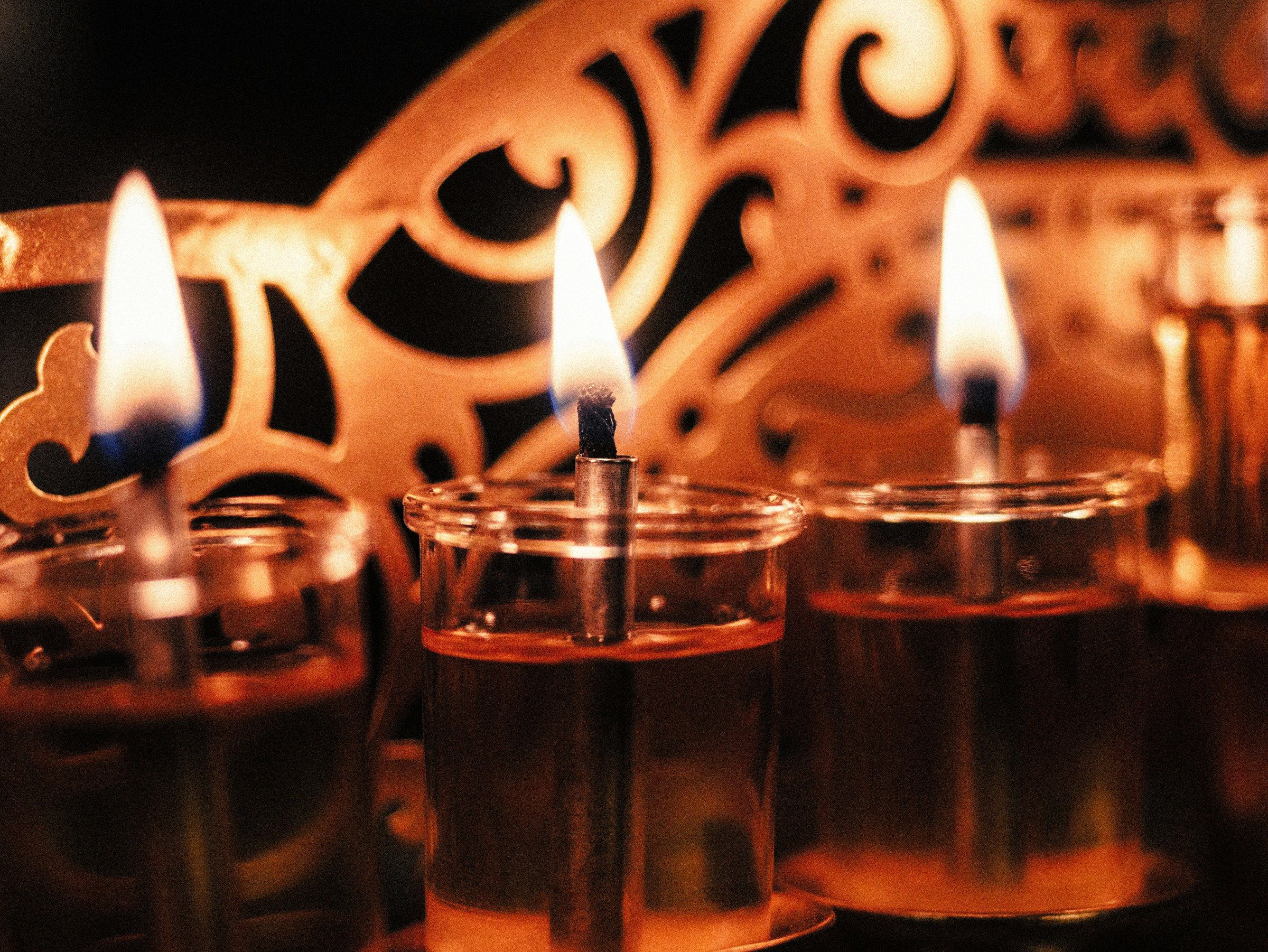
Most Jewish children can tell the story of Chanukah. The Syrian-Greeks ruled the Land of Israel and set out to uproot Judaism by stripping the Torah of its G-dliness, and the defiling of the Beis Hamikdash, the Holy Temple, was the sign of it. Against all odds, one cruse of pure olive oil was found, still under the seal of the Kohen Gadol. It was enough for a single day, and it burned for eight, the time needed to prepare new pure oil.1
It is curious that we remember Chanukah this way. The festival was not set up mainly to celebrate a military victory, or even the recovery of the Beis Hamikdash. Its centre is the small miracle of the oil. Two details of that miracle, which are easy to pass over, explain why.
The oil they did not have to wait for
The Menorah was lit with oil of the very highest purity. In an emergency, though, Jewish law does not insist on it, and a lower grade could have been used.2 The Menorah could have been lit that first night without any miracle at all. The Chashmona’im chose not to compromise. They lit with the perfect oil and left the outcome to Hashem.
The wick they did not trim
A lamp of this kind works in a particular way. Olive oil does not burn by itself; no amount of heat will set a bowl of it alight. A wick, usually of cotton, draws the oil up, and it is the oil in the wick that burns, not the wick itself. A thick wick draws oil quickly and a thin one slowly, so the size of the wick decides how long the oil will last.
The Chashmona’im knew they had one day’s oil and needed eight. They could have cut the wicks to an eighth of the usual thickness, and the oil would have lasted eight times as long. The Menorah was large, and its wicks could easily have been split. Again they made the plain choice, the standard wick, and left the rest to Hashem.
A light with no use
Halacha treats the Chanukah light differently from any other.3 Every other light serves some purpose: the lights of a shul (synagogue) give honour, and the Havdalah candle after Shabbos is there to be used. The Chanukah lights may not be used at all. We may not read by them or benefit from them in any way.
Why, then, do we place the menorah in a window, or, as is the Chabad custom, in a doorway opposite the mezuzah? Is publicising the miracle not a use? Publicity is part of the mitzvah, and many people make a point of lighting large, bright menorahs for all to see. Yet it is not the whole purpose. In times of danger the menorah is lit indoors, out of sight, and the mitzvah is still complete. In the end there is no purpose to it beyond the command to light.
So when a Jew lights the menorah, he does it with no thought of what it will do for him. He recalls a miracle that came when Jews kept a mitzvah without compromise and with a whole heart, and left the outcome to G-d. Each time he lights, he looks again at a hidden blueprint for Jewish life.
Three things above reason
The Rebbe Melech HaMoshiach takes this further. Chanukah has three parts: the decrees of the Greeks, the self-sacrifice of the Jews, and the miracles, both the victory in battle and the lights. Together they reveal the essential bond between every Jew and G-d, because all three are above reason.
The decrees. Greeks and Jews lived side by side for a long time without trouble. Many Jews, especially the less observant, blended into Greek culture, as Jews have done in many lands since. The Greek decrees did not forbid the study of Torah. They demanded that G-dliness be removed from it, so that Torah would rest on reason alone. Oil, the symbol of light and G-dliness, had to be defiled. The Jewish insistence on pure oil was an insistence that the Torah stay pure, as it was given.
The self-sacrifice. Resisting a culture that wins people over by persuasion takes its own kind of strength. The Jews of that time refused to give in to the decrees and chose to rely on Hashem beyond any calculation. That bond beyond logic was exactly what enraged the Greeks.
The miracles. A miracle is, by definition, above and beyond reason. The miracles of Chanukah showed the special bond between the Jewish people and G-d, and the lights are that bond made visible. The Jews could have used impure oil, and they could have used thinner wicks. They did the mitzvah completely and left the rest to Hashem, and the miracle broke through the limits of one small cruse and an ordinary wick.
What we celebrate
This is why the Sages placed the light, and not the war, at the centre of the festival. Chanukah celebrates a relationship with G-d that is higher than nature. When a Jew lives by Hashem’s will, learning Torah and keeping mitzvos as fully as he can, he lives a life of purpose and joy, and, as the cruse of oil showed, nothing is beyond reach.
Footnotes
Sources
- Sichos in English, Chanukah: The Secret of Chanukah.
Adapted from Sichos in English, based on Likkutei Sichos, vol. 3.
Related
Why Did the Greeks Defile the Oil?
The Greeks did not pour the oil away. They left it in place and made it impure. The Rebbe explains what that choice reveals about the war of Chanukah.
Sichos in EnglishWhy Do We Celebrate the Miracle of the Oil?
Chanukah had two miracles, a victory in battle and the oil that burned eight days. The Sages built the festival around the oil. The Rebbe explains why, and what it says about body and soul.
Sichos in English
The Fire in the Flint
Chassidus compares the Jewish soul to the fire hidden in a flint: it can lie under water for years and still give a spark. The cruse of oil is the same flame.
The Story of Chanukah
From the Greek decrees and the stand at Modiin to the miracle of the oil: the Chanukah story, told from the traditional sources.
The Miracle of the Oil
One sealed jug of pure olive oil, enough for a single day, kept the menorah of the Beis Hamikdash burning for eight days. What the Talmud says, and how the commentators explain it.