Olive Oil and Candles
Which fuel and wicks to use for the Chanukah lights, why olive oil is best, how long the lights must burn, what to buy, and what to do with leftover oil after Chanukah.
On this page
Olive oil first
Halacha: any oil may be used for the Chanukah lights, and so may wax candles. Olive oil is best, because it gives a pure, clear, steady flame, is drawn up easily by the wick, and was the fuel of the miracle. If olive oil is not available, use another oil that burns cleanly; Rabbi Yaakov Goldstein (Shulchan Aruch HaRav) writes that oil of any kind is better than a wax candle.
Chabad custom: olive oil and cotton wicks for the Chanukah lights, and a beeswax candle for the shamash. Sefer HaMinhagim explains that beeswax comes next after olive oil in the Shulchan Aruch, that a candle is easier to handle for the shamash, and that it sets the shamash apart from the mitzvah lights.
Some things to keep in mind:
- All the lights on one menorah use the same fuel. Do not mix oil cups and wax candles.
- Not valid: electric bulbs, gas flames and candles without a wick. Where an open flame is impossible, such as in a hospital or on a flight, the Badatz guide says to switch on an electric menorah set aside for Chanukah, with incandescent bulbs, without a blessing.
- Not to be used: oil that smells foul, oil that was stolen, and preferably oil kept under a bed or in a bathroom. Oil taken without permission counts as stolen.
- Buy genuine olive oil with reliable certification. The Badatz warns that imitation olive oil is sold, yellower, thinner and less bitter than the real thing, with an unpleasant smell when lit. Extra virgin, food-grade, liquid oil is the best for the mitzvah, and many prefer it.
Wicks
Cotton or linen wicks are best, and any other material is acceptable, except wood. Some use only untreated wicks, so that the first flame comes from the oil and not from wax on the wick; others coat their wicks in oil or singe them beforehand. With waxed floating wicks, hold the shamash long enough to melt the wax down to the wick, so the flame is drawing oil from the start. Some roll their own wicks, though pre-made ones that burn better and more steadily may be preferable.
Sefer HaMinhagim records two views on changing wicks each night, and notes that the Previous Rebbe’s custom was unclear; the Rebbe later related in a sichah that the Previous Rebbe reused his wicks.
How long they must burn
- Halacha: the lights must have enough fuel, at the moment they are lit, to burn until half an hour after nightfall. If too little was put in, adding more afterward may not help: put them out, add fuel, and relight without the blessings.
- Chabad custom: enough fuel for at least fifty minutes.
- Friday: since the lights are kindled before sunset, they need much more. With candles, that is at least seventy minutes.
- A word on boxed candles: the small coloured candles are made to burn about half an hour, and on a crowded menorah, from the second night on, the heat of neighbouring flames can make them burn out sooner. Buy longer candles, and always on Friday.
After the lights have burned
Once the required time has passed, the lights may be put out, and the menorah may be moved. The Badatz suggests saying, before lighting, that only the fuel needed for the mitzvah, half an hour or fifty minutes, is set aside for it. Then whatever is left afterward has no special status.
Leftover oil after Chanukah
- Halacha: oil and wicks left in the menorah after Chanukah were set aside for a mitzvah, so they are burned, not used for anything else. Oil left after an earlier night may simply be used again the next night, except after the eighth night.
- If you made the stipulation above, the leftover oil does not need to be burned.
- Oil still in the bottle, never poured into the menorah, has no special status and may be used for anything.
- Disposable cups and menorahs may be thrown away, wrapped respectfully.
Chabad Or Balev records a custom to burn the leftover oil and wicks on Zos Chanukah.
For your own question, ask your local Chabad rabbi or asktherav.com.
For a question about your own home or situation, ask your local Chabad rabbi, or write to AskTheRav.
Sources
- Rabbi Yosef Yeshaya Braun, Badatz of Crown Heights, Day-to-Day Halachic Guide: Chanukah 5786.
- Shulchan Aruch HaRav (shulchanaruchharav.com), Chanukah Halacha, Chapter 3: The Chanukah candles.
- Shulchan Aruch HaRav (shulchanaruchharav.com), Leftover oil.
- Sichos in English, Chanukah: Customs (from Sefer HaMinhagim).
- Chabad Or Balev, זאת חנוכה.
Based on the Badatz of Crown Heights guide and Rabbi Yaakov Goldstein's Shulchan Aruch HaRav guides.
More on the menorah
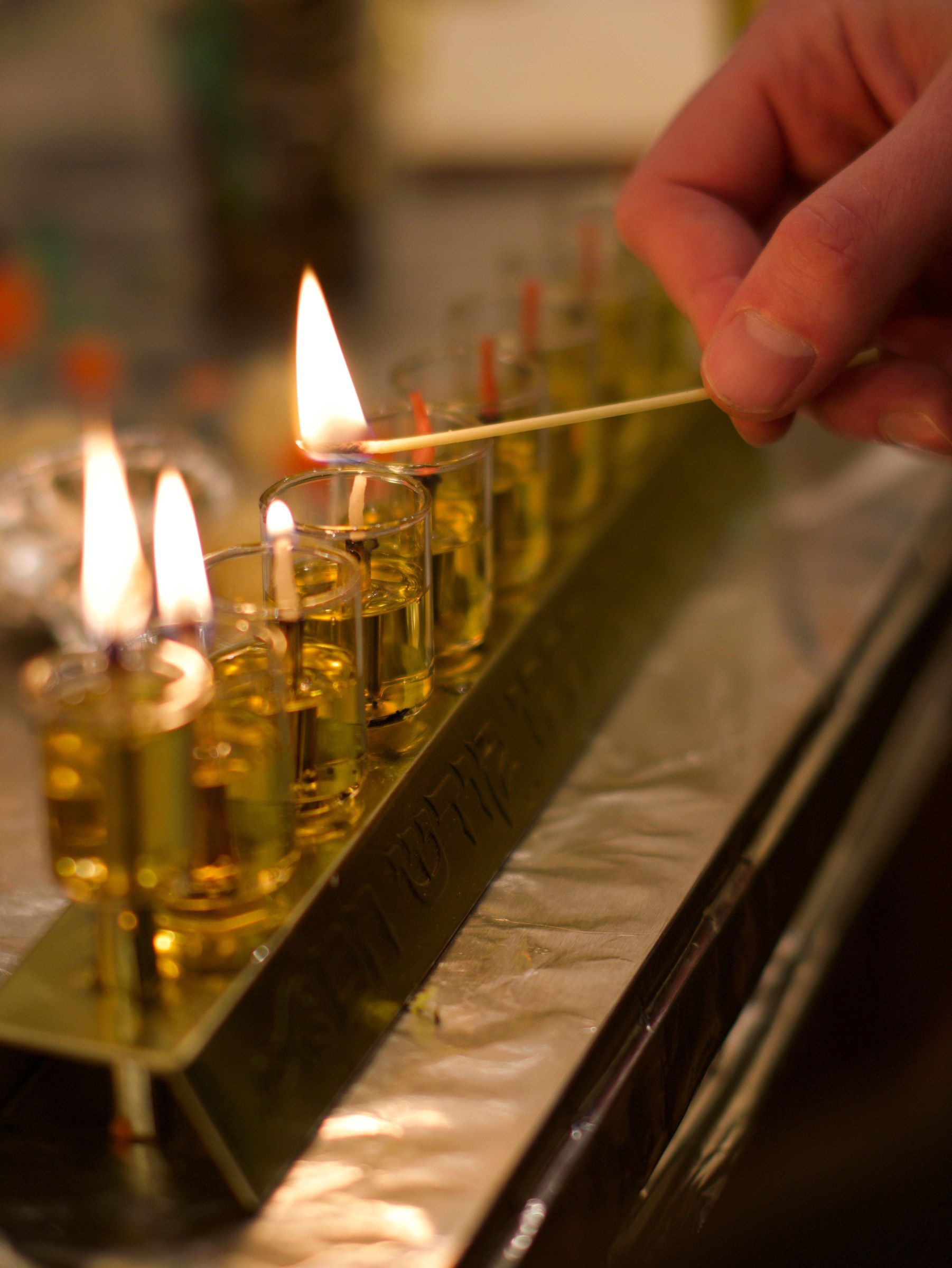
How to Light the Menorah
A step-by-step guide to lighting the Chanukah menorah: what you need, where to place it, when to light, the blessings, the order of the lights, and Friday and Saturday night.
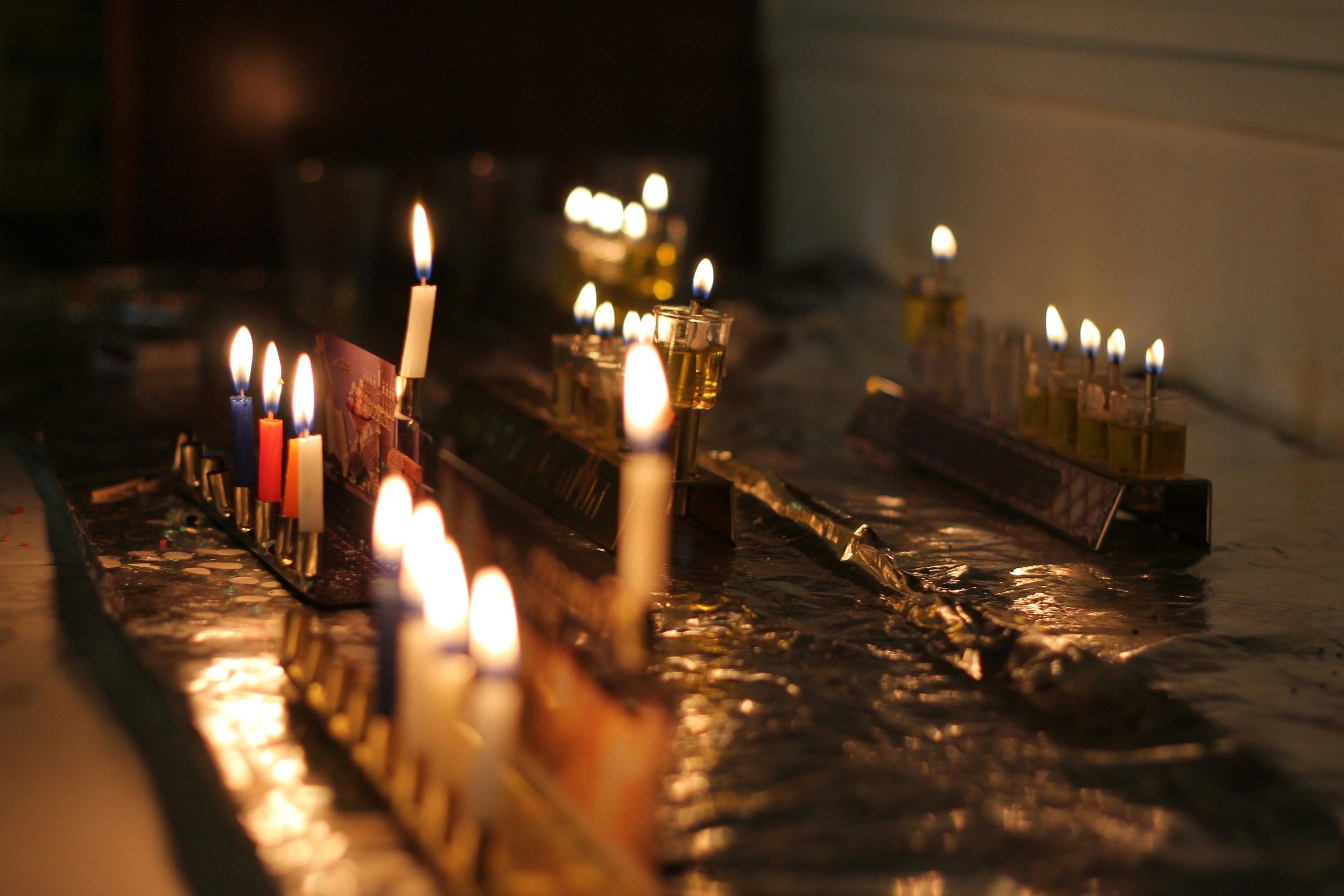
Choosing a Menorah
What makes a Chanukah menorah kosher and beautiful: lights in a straight row at one height, a shamash set apart, good materials, and why the Rebbe encouraged straight diagonal branches.
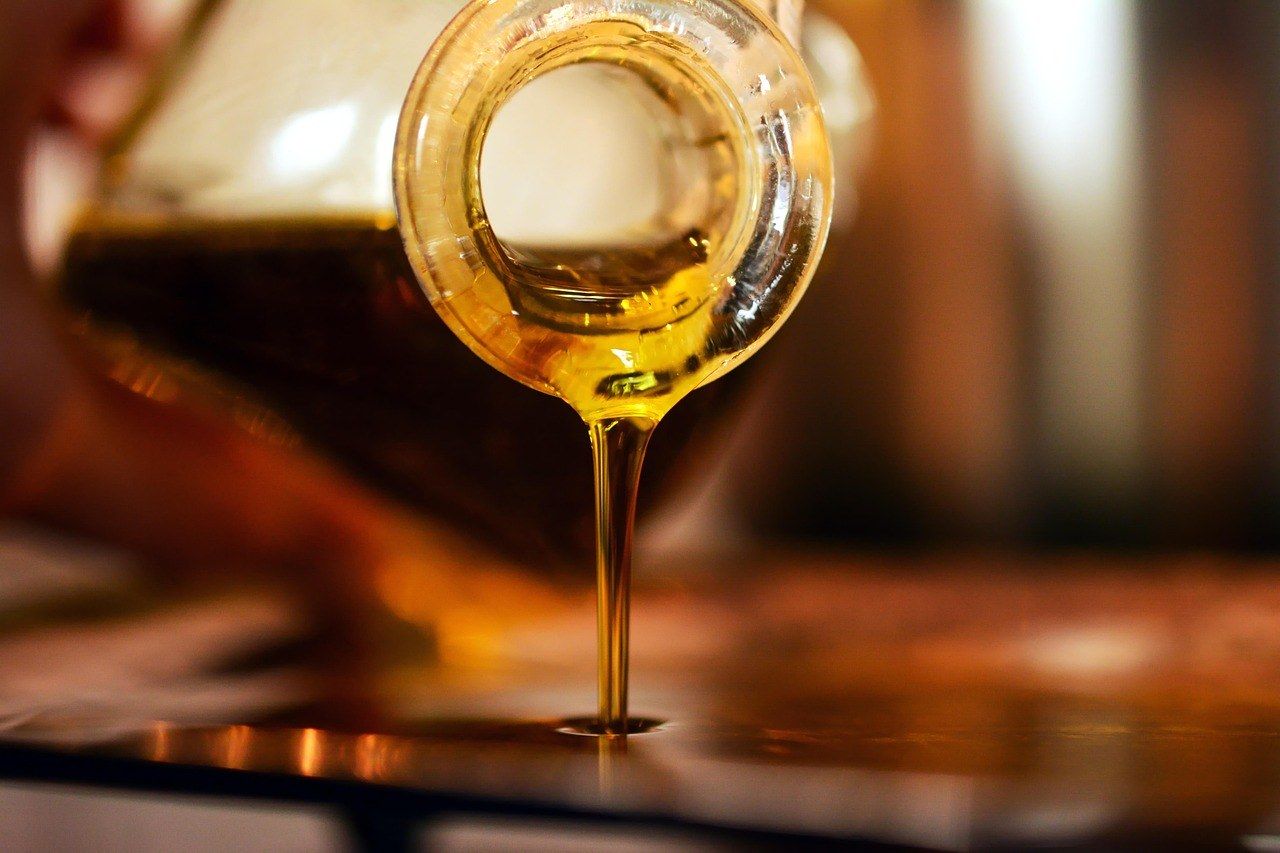
The Miracle of the Oil
One sealed jug of pure olive oil, enough for a single day, kept the menorah of the Beis Hamikdash burning for eight days. What the Talmud says, and how the commentators explain it.
Shabbos Chanukah
Lighting the menorah before Shabbos on Friday and after Havdalah on Saturday night, the menorah during Shabbos, prayers and Torah readings, dreidel and gelt on Shabbos, and this year's two Shabbosos of Chanukah.
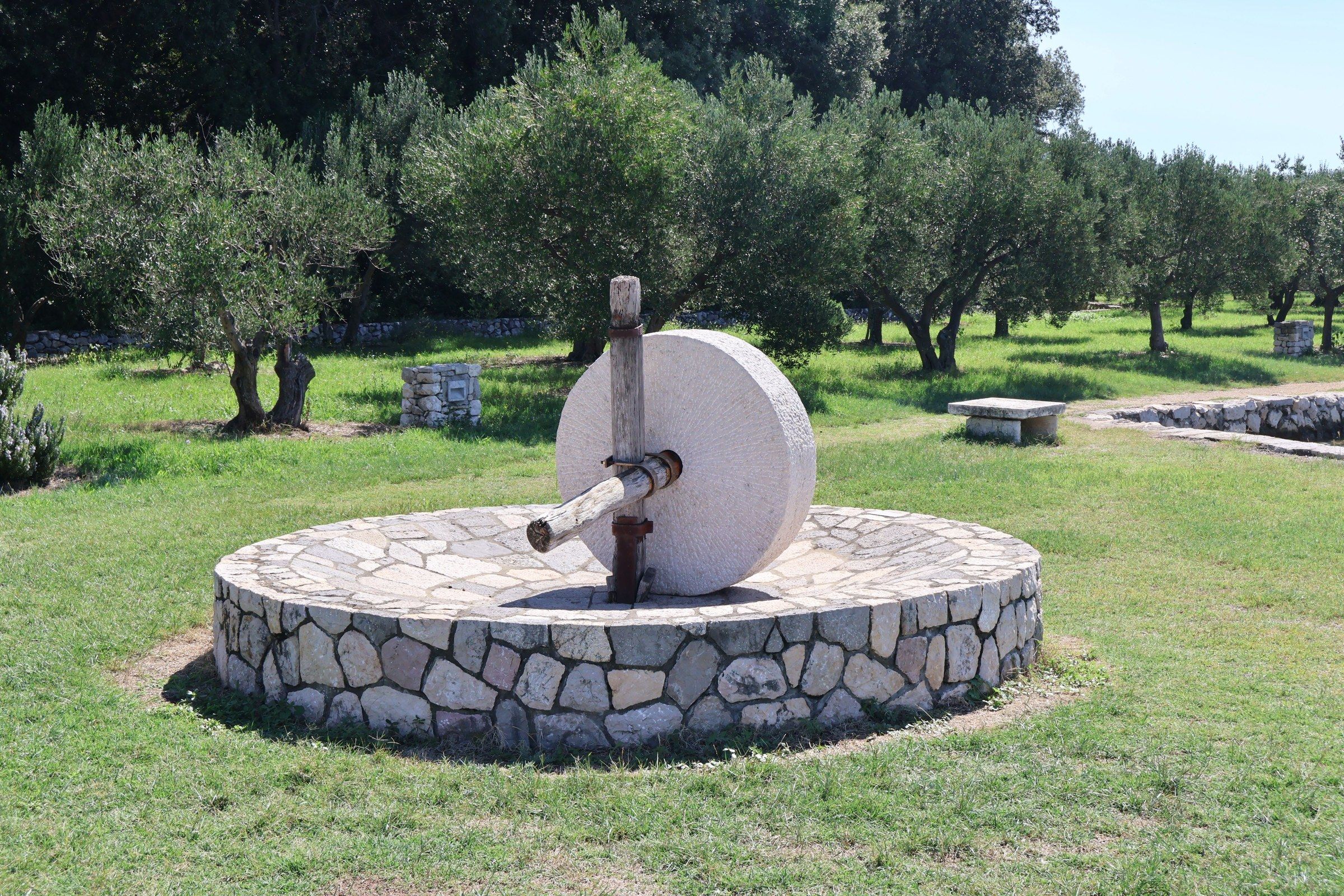
The Olive Oil Workshop
Ages 4 and up, with an adult45 minutes