Traditional Chanukah Foods
Why we eat latkes, sufganiyos and dairy foods on Chanukah, festive meals, and the right blessings on latkes and doughnuts.
It is customary to eat foods fried in oil on Chanukah, in remembrance of the miracle of the oil. Potato latkes and sufganiyos, jelly doughnuts, are the best known. The Rebbe Melech HaMoshiach explained this custom at length in a sichah of 5752 (Sefer HaSichos 5752, p. 196).
Dairy foods
It is also customary to eat cheese and milk dishes on Chanukah, in memory of Yehudis, who fed the enemy general salty cheese and strong wine and so saved her town. Cheese latkes bring both customs together. See The Story of Yehudis.
Festive meals
The Rambam calls the days of Chanukah days of joy, and the Rema writes that adding festive meals on Chanukah is in part a mitzvah. The custom is to add such meals, and to sing and tell of G-d’s miracles during them, which makes them a seudas mitzvah, a meal for a mitzvah, according to all opinions. The Rebbe encouraged gatherings and farbrengens on every day of Chanukah. The Shabbos and Rosh Chodesh meals of Chanukah deserve extra celebration.
The blessings
On latkes
- Latkes made from grated potatoes: borei pri ha’adamah.
- If the potatoes were completely mashed, or potato flour was used: shehakol.
- If flour from one of the five grains was added for taste: mezonos.
- Going back for more latkes does not need a new blessing, even if you did not plan on a second helping when you made the first, as long as you knew more were available.
On doughnuts
- Doughnuts fried in oil: mezonos before, and al hamichyah after. Frying counts like cooking, not baking. This holds even if you make a whole meal of doughnuts; you do not need to wash for bread.
- Doughnuts eaten as a snack or dessert during a bread meal get their own mezonos. Doughnuts eaten to fill up, as part of the meal, are covered by hamotzi.
- Baked “cake doughnuts” that are not deep-fried are mezonos if most of their liquid is oil or juice; made mainly with water and not fried, they are hamotzi.
- Doughnuts fried in olive oil that are still wet enough on the surface to pass on moisture need hand-washing without a blessing. Commercial doughnuts, usually fried in vegetable oil, do not.
- All doughnuts, even commercial ones, need to be bishul Yisrael, cooked with the participation of a Shabbos-observant Jew.
- Dough made only for fried doughnuts is exempt from separating challah.
On Shabbos
You may squeeze excess oil out of a doughnut on Shabbos if the oil is thrown away, but you may not squeeze or scoop out the jam to avoid eating it. Do not warm doughnuts on Shabbos, not even on top of a pot.
Recipes
Try our potato latkes, sufganiyos and cheese latkes.
For a question about blessings, ask your local Chabad rabbi or asktherav.com.
For a question about your own home or situation, ask your local Chabad rabbi, or write to AskTheRav.
Sources
- Rabbi Yosef Yeshaya Braun, Badatz of Crown Heights, Day-to-Day Halachic Guide: Chanukah 5786.
- Rabbi Yosef Yeshaya Braun, ChabadInfo, Rabbi Braun: Doughnuts in Halachah.
- Sichos in English / L'Chaim, Chanukah: Recipes.
- Rabbi Y.Y. Shagalov, Living With Moshiach, Your Chanukah Guide (Living With Moshiach, Vayeishev 5760).
- HaGeula, שאלות ותשובות על חג החנוכה.
Based on the Badatz of Crown Heights guide and Rabbi Yosef Yeshaya Braun.
More on customs
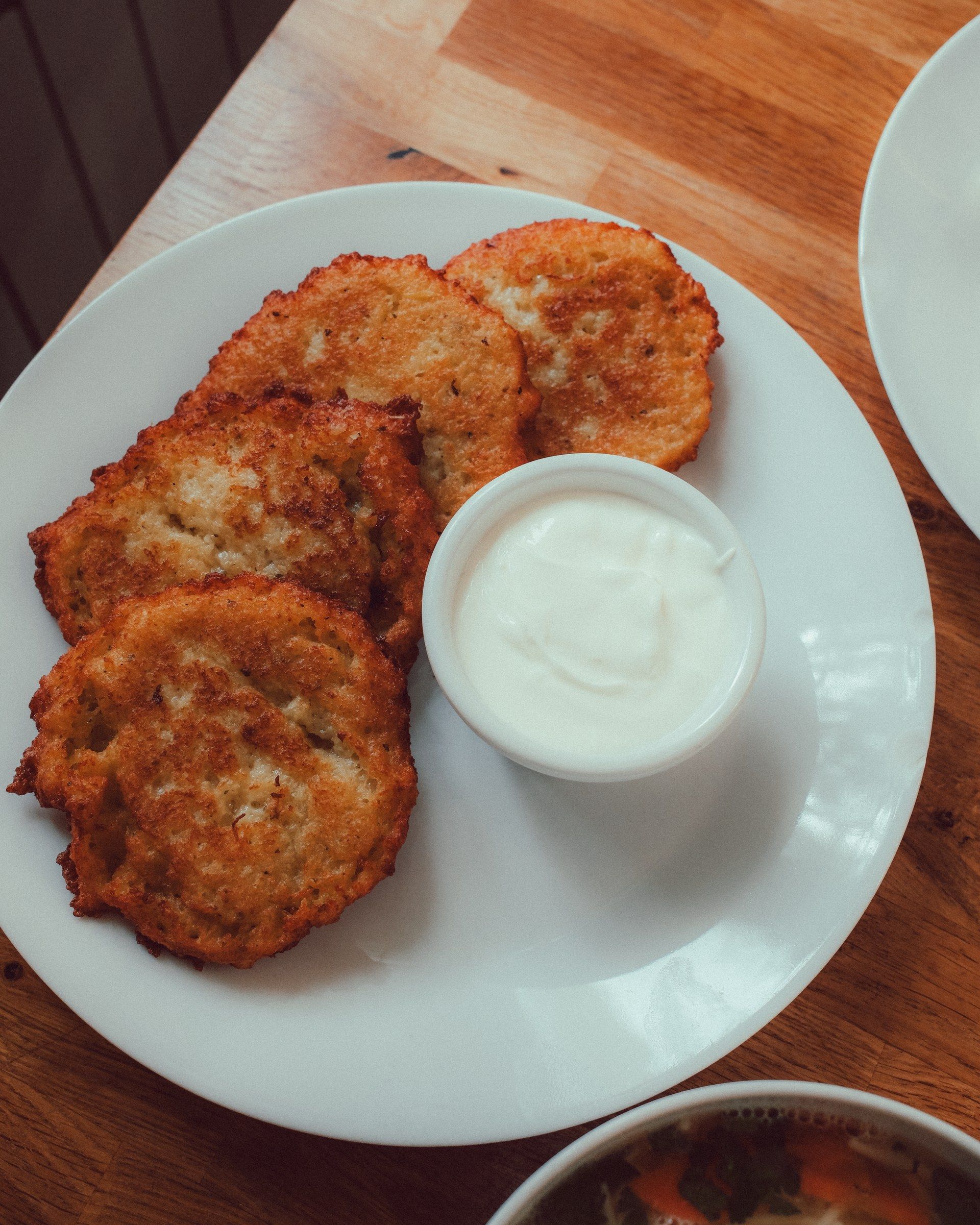
Classic Potato Latkes
Serves 4 to 6Pareve
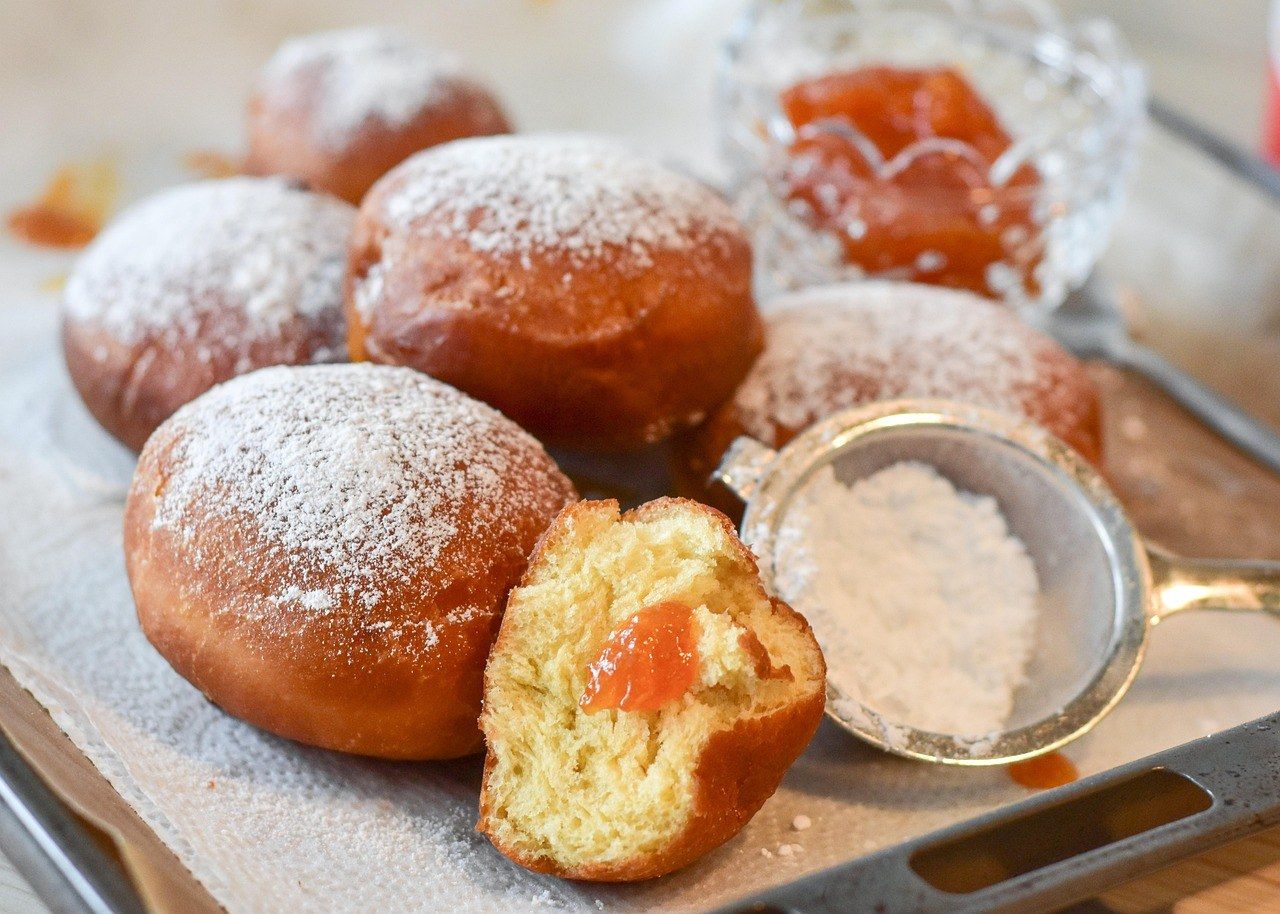
Traditional Sufganiyos
30 minutesDairy
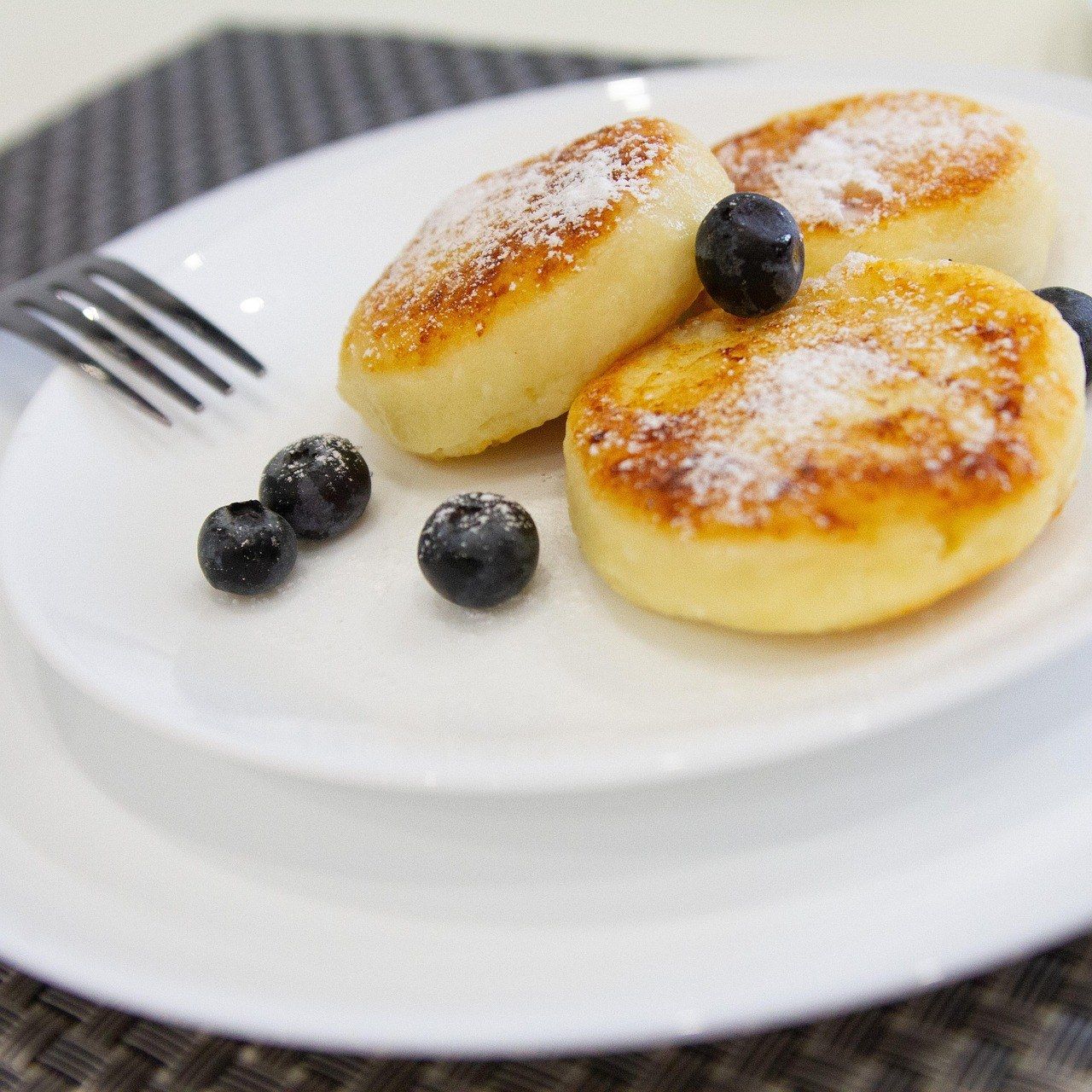
Cheese Latkes
Dairy
The Story of Yehudis
Yehudis, daughter of Yochanan the High Priest, saved her besieged town by going alone into the enemy camp. Her story is why dairy foods are eaten on Chanukah.
How to Celebrate Chanukah
The mitzvos and customs of the eight days: lighting the menorah, the added prayers, gelt, tzedakah, festive meals, fried foods and dreidel, with this year's dates.