The Light of the Third Beis Hamikdash
Chanukah is the festival of a rededicated Beis Hamikdash, and every year it stirs the longing for the next one. What the Menorah's light was for, what the Chashmona'im knew in their darkest hour, and the light the Third Beis Hamikdash will bring.
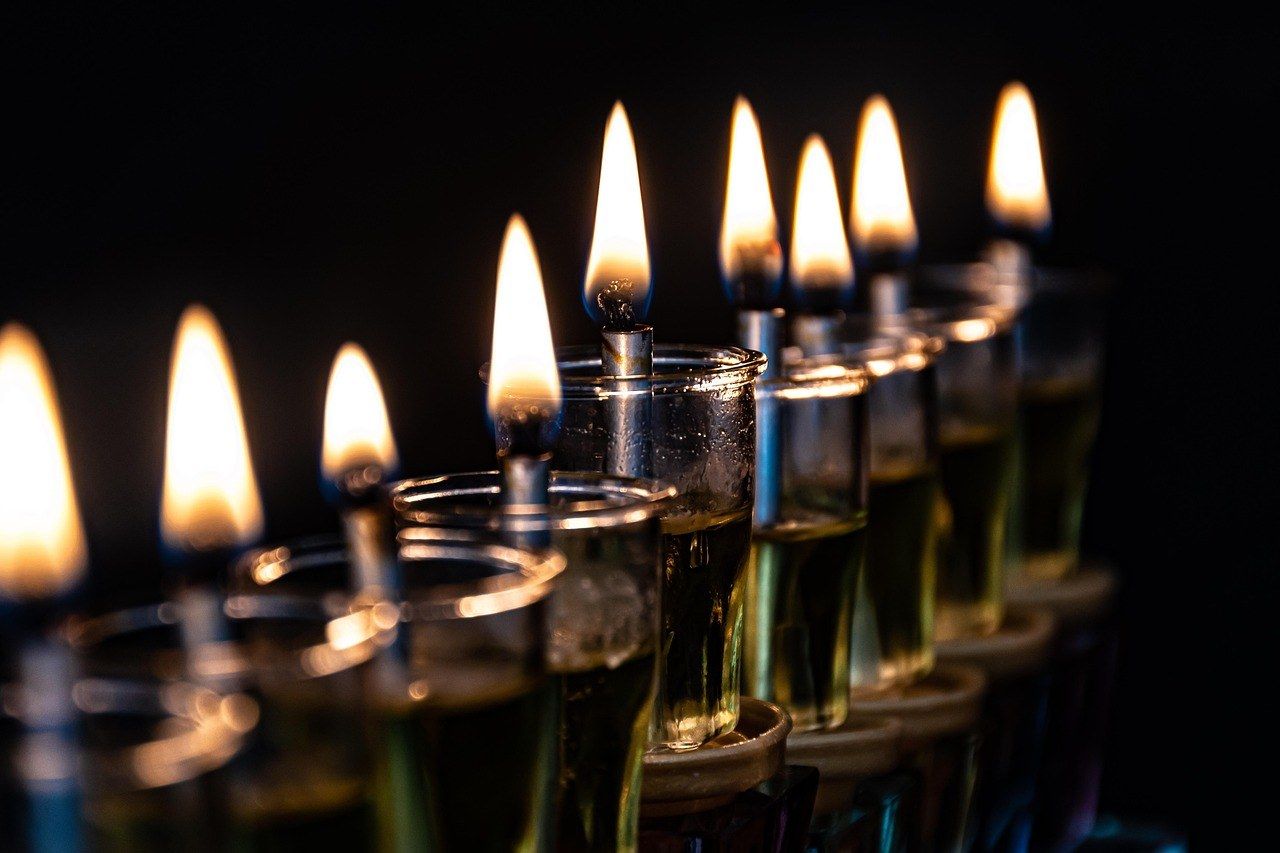
Chanukah means “dedication.” The festival was set up in memory of the rededication of the Beis Hamikdash, the Holy Temple, in the days of the Chashmona’im, and in its very essence, HaGeula writes in a summary of the Rebbe’s Chanukah teachings, it calls up the longing for the Geulah and for the building of the Beis Hamikdash once more.
A light for the world
What was the Menorah of the Beis Hamikdash for? Not to light up the Sanctuary. The Sages explain that its light was meant for the whole world.1 The windows of the Beis Hamikdash were built to show it: narrow on the inside and wide on the outside, the reverse of ordinary windows, so that light would flow out of the building rather than into it.2
The shape of the Menorah, as the Rambam drew it and the Rebbe explained it, says the same. Its goblets were turned upside down, the way a cup is held to pour rather than to receive. The Menorah’s purpose was to send G-dly light out to the world. The Sages call it “testimony to all the inhabitants of the world that the Divine Presence rests within Israel.”3
On Chanukah we place our own lights at the door, facing the street, so that they shine outside. Each Chanukah menorah is a small echo of that Menorah, whose light was meant for everyone.
What the Chashmona’im knew
The kingdom of Greece set out to force the Jews away from their faith, and it defiled the Beis Hamikdash and its vessels. Under the call Mi laShem elai, “Whoever is for G-d, to me,” Matisyahu the Kohen and his sons gathered a handful of Jews who resolved to stand and fight, and the few defeated the many. When they came to light the Menorah, the Greeks had defiled all the oil, and only one small cruse was found still pure, sealed with the seal of the Kohen Gadol. It was enough for one day and burned for eight, until new pure oil could be made.
HaGeula draws attention to the state of things before the miracle, and to how much it resembles our own: a crisis both material and spiritual across the nation, and foreign winds sweeping through wide parts of the people.
By cold reasoning, even from a Torah and halachic point of view, a war at such a disadvantage would have been ruled out. Any military strategist would have warned them that it could end in disaster. The Chashmona’im were certain that the reality of the world cannot clash with the will of its Creator. At most, the truth can be hidden for a time, as a test to be met. If one acts with faith and trust, even through natural means, one finds that nature and the world, as they are, fall into line with G-d’s will. At the moment when the darkness seemed deeper than ever, they were in truth living with the Geulah, the time when the G-dliness in every detail of creation will be seen.
That approach is more relevant than ever, HaGeula continues, in light of the Rebbe Melech HaMoshiach’s call that ours is the generation of the Geulah. Our part is to prepare for it, “to greet Moshiach,” by adding in mitzvos and good deeds and by learning what the Torah teaches about the Geulah and Moshiach.
The light we will see
What kind of light will the Third Beis Hamikdash bring? Rabbi Heschel Greenberg, in his collection of essays Light from the Future, begins with the first light of all. The light created on the first day of Creation let one see from one end of the world to the other. G-d hid it away so that the unworthy could not use it, and kept it to be revealed again in the Messianic Age. The miracle of Chanukah gave a glimpse of it.
The Greeks, he notes, prized light, enlightenment and beauty, and yet the Sages called their rule “darkness.” Their beauty was all on the surface. Judaism believes in an inner beauty, and the Greeks did not object to Judaism as long as it stayed a culture and a literature, without the Divine core that gives it its true beauty.
True light, by his account, has three marks. It shows what lies beneath the surface, the soul of a thing and not only its shell. It shows the whole picture, each part in the context of everything else, physical and spiritual. And it shows past and future: where a thing came from, what it is for, and how it will turn out. Without that, he writes, watching a surgeon at work without knowing that he is a surgeon saving a life is like seeing nothing at all.
What makes the age of the Geulah so special is that everyone will have that light. All of us will see the inner beauty and G-dliness that fill creation, and see each thing in its proper place in G-d’s plan, including the events of the past that made no sense from where we stood.
The dedication to come
HaGeula closes its summary with the hope the whole festival carries: that the Rebbe Melech HaMoshiach will very soon come and redeem us, and then we will see the Menorah lit again “in Your holy courtyards” and celebrate the dedication of the Third and eternal Beis Hamikdash.
Until then, Rabbi Greenberg writes, as we look into the small flickering flames of the Chanukah lights, we can strengthen our faith in Moshiach’s coming and in the Rebbe’s message that the Redemption is at hand, and think of the true light that will soon fill the whole world.
Footnotes
Sources
- HaGeula, על הניסים ועל הנפלאות אשר יתחוללו ליהודים.
- Moshiach.com (via the Internet Archive), Essay: The Design of the Menorah.
- Rabbi Heschel Greenberg, Jewish Discovery Center, Light from the Future: Essays on Chanukah.
Drawn from HaGeula (in translation), Moshiach.com and Rabbi Heschel Greenberg's Light from the Future.