A Menorah in Bergen-Belsen
In Bergen-Belsen, Reb Shmelke Shnitzler searches in vain for oil to light Chanukah. The day before the festival, his foot sinks into a patch of earth by the fence. Years later, in Brooklyn, he learns who put it there.
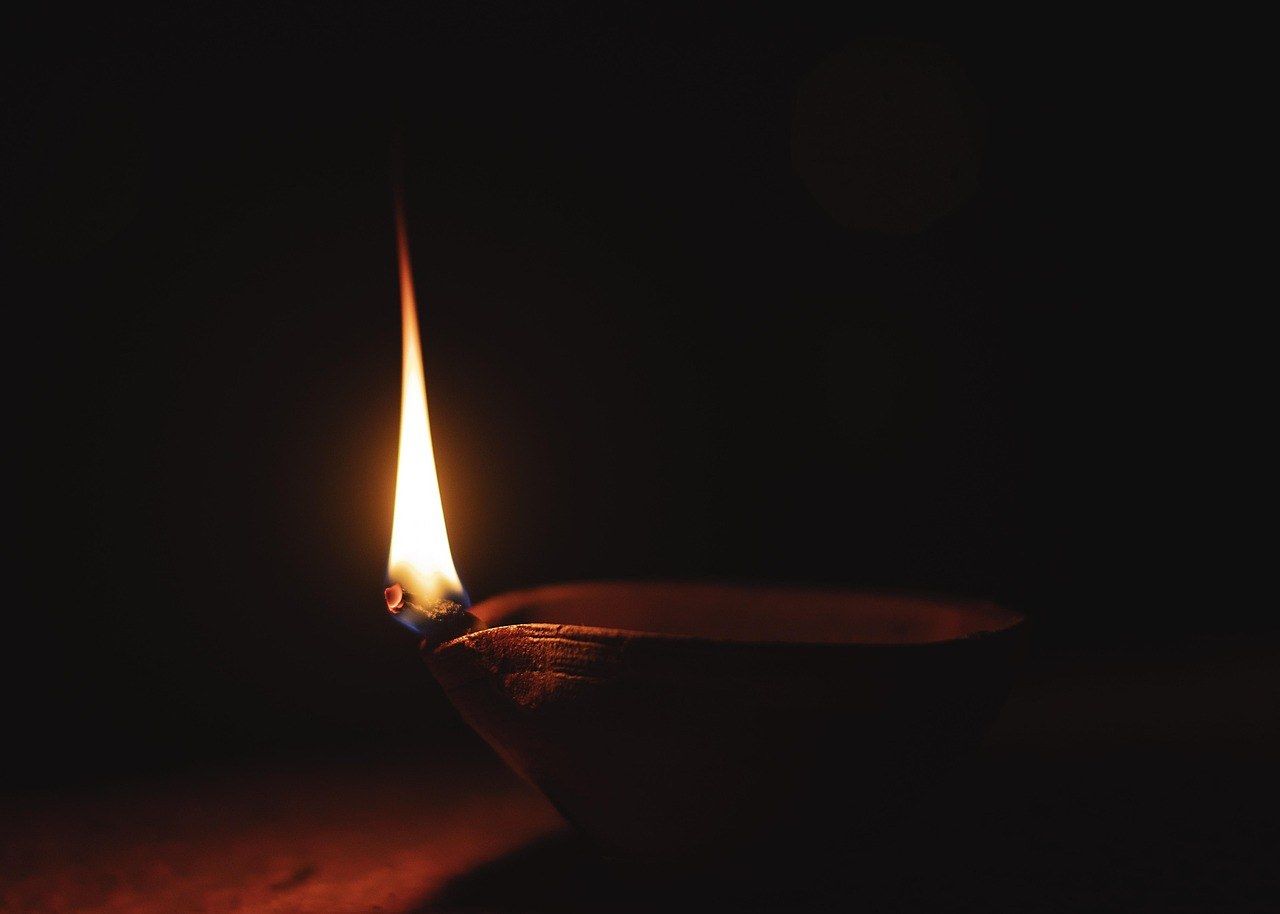
Among the last prisoners brought to Bergen-Belsen near the end of the Second World War was a man whom everyone in the camp soon came to know as Reb Shmelke. His full name was Shmuel Shmelke Shnitzler, a Chassid and Torah scholar from Hungary. He was very tall and dignified, with warm, searching eyes. And, most remarkable of all in that place, he was cheerful.
He suffered everything the others suffered, the terror, the hunger, the beatings. Yet somehow it did not seem to touch him in the same way, as if part of him were somewhere else. Where he drew his strength from, nobody knew. But it was plain that he drew it from somewhere without limit, and he shared it. “A Jew and despair are opposites,” he would say at every chance. “They cannot exist together.” Whenever he could, he gathered a minyan for prayer, above all on Shabbos. At night he told stories of the great Chassidic Rebbes, and for a while his listeners were carried far away and forgot the pain of body and soul.
To everyone’s astonishment, he even won the favour of some of the cruellest guards, and through them he was able to help a number of prisoners. His assigned work was to carry out of the barracks the bodies of those who had died of hunger. He did it with all the respect he could, and he saw it as the holiest work open to him there.
No oil
As the days passed, one question weighed on Reb Shmelke more and more. Chanukah was only a few days away. Where could he possibly find oil for the lights?
He asked everyone he thought might help. No one had oil, or anything that could stand in for it. To find anything that would burn, inside a concentration camp, was unthinkable, they told him. Impossible.
He would not give up. The mitzvah meant too much to him. And he knew what it would mean to the Jews around him: a light shining into the deepest darkness, a reminder of the few who defeated the many, the pure who overcame the impure.
The patch of red earth
On the day before Chanukah he was sent to a barracks at the far end of the camp, where someone had died that day. Near the fence his foot sank into a patch of reddish earth. It was covering a small hole, and the hole had clearly been dug on purpose.
He looked down. Something in it caught the sunlight. He knelt and scraped away some earth with his hands. It was a small jar, half full of something thick and congealed. Could it be? He pulled off the lid and dipped in a finger. Oil.
His mind flew at once to the first Chanukah, and the one cruse of oil the Chashmona’im found. Was he dreaming?
Beneath the jar was more. He dug a little further and found a small bundle wrapped in a scrap of cloth. Inside were eight little cups and eight thin threads of cotton.
Someone had buried a Chanukah menorah here, deliberately. Reb Shmelke put everything back, filled in the hole and smoothed the earth carefully. It would be far too dangerous to carry these things until the next evening. And perhaps they belonged to someone. For the rest of that day, as he went about the camp, he asked as innocently as he could whether anyone had hidden some oil. People stared at him as if he had lost his mind.
The next night, all the Jews of his barracks crowded around Reb Shmelke as he struck a match, said the blessings with deep emotion, and touched the flame to the thin wick in the first little cup. In that grim place it was like a scene from a storybook. And it happened again, and again, for all eight nights.
In Brooklyn
Reb Shmelke, no longer young, lived through the months that followed until the Allied armies liberated the camp. When the war was over he went back to his town in Hungary to try to gather up the pieces of his shattered life. Some years later he travelled to America, and one of the visits he made there was to the Satmar Rebbe, Rabbi Yoel Teitelbaum, in Brooklyn.
The Satmar Rebbe, it turned out, already knew who he was and what he had done, and received him very warmly. They talked for a while. Then, suddenly, the Rebbe changed the subject.
“I hear that you had the great privilege of lighting Chanukah candles in Bergen-Belsen.”
“How does the Rebbe know that?” Reb Shmelke stammered.
“I heard, I heard,” said the Rebbe, with a mysterious smile.
A few moments later he leaned close and whispered in his visitor’s ear. “I am the one who hid the oil, the cups and the wicks in that hole by the fence. I was a prisoner in the camp the year before you came, before my miraculous escape. And when I buried them, I believed with all my heart that when the time came, the right person would find them, and would know exactly what to do.”
Sources
- Ascent of Safed, translated and adapted by Yerachmiel Tilles from Sichat HaShavua no. 468, Chanukah in Bergen-Belsen (story #217).
Retold from Sichat HaShavua, no. 468, as translated by Yerachmiel Tilles for Ascent of Safed.
More Chanukah stories
The Light in the Window
A band of partisans fleeing across a frozen border takes shelter in a guard's hut. The old rabbi they almost left behind lights his menorah in the window.
Siberian Chanukah Lights
Reb Mordechai Chanzin spent 21 years in Soviet prisons and camps. One Chanukah, in a camp in the far north, he and seventeen young Jews lit a makeshift menorah, and were caught and tried. The judge had a request.
Chanukah in the Shadow of the Inquisition
In Seville under Torquemada, a Jewish grandmother gives her three granddaughters silver menorah brooches and tells them the story of Chanukah. That same night the Inquisition comes to the door.
The Miracle of the Oil
One sealed jug of pure olive oil, enough for a single day, kept the menorah of the Beis Hamikdash burning for eight days. What the Talmud says, and how the commentators explain it.