Why Eight Days?
The oil was enough for one night, so the miracle lasted seven. Why, then, does Chanukah last eight days? The classic answers, and what the number eight points to.
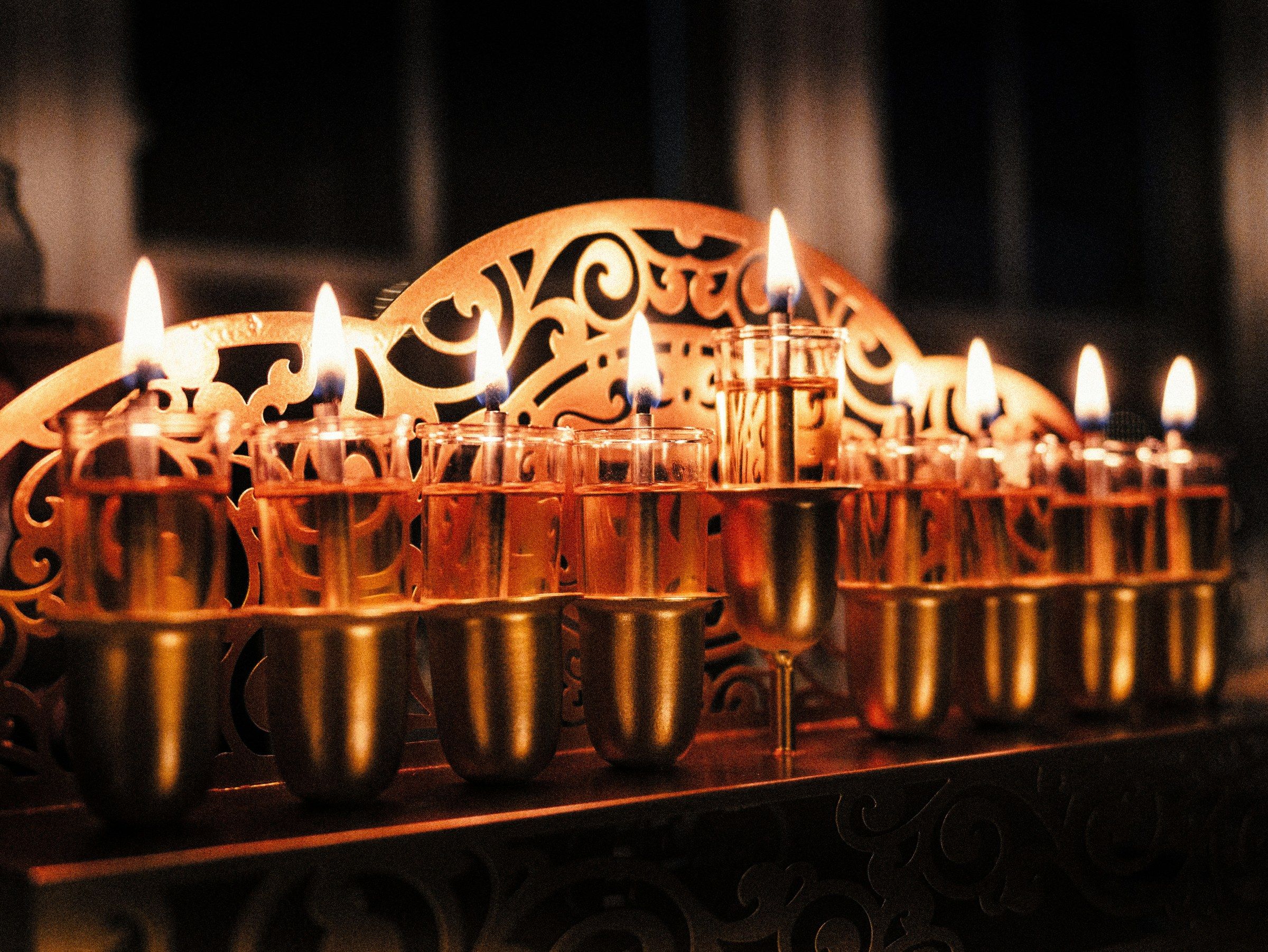
The Gemara tells the story in one line: the oil in the cruse was enough for only one day, yet they lit from it for eight days.1 Read carefully, that sentence holds one of the best-known questions in all of Jewish learning. If there was enough oil for the first night, the first night was no miracle. The wonder began on the second night and lasted seven. So why do we celebrate eight days of Chanukah, and not seven?
The question is asked by the Beis Yosef, Rabbi Yosef Karo, author of the Shulchan Aruch (the Code of Jewish Law), and generations of scholars have offered answers to it.
The Beis Yosef’s three answers
The Beis Yosef himself gives three.2
The oil was divided. The Chashmona’im (the Maccabees) knew it would take eight days to prepare new pure oil. Rather than light the Menorah for one night and leave the next seven dark, they divided the cruse into eight equal parts. On the first night, that small portion burned the whole night through. So the miracle began on the very first night.
The cruse stayed full. After they filled the Menorah on the first night, they saw that the cruse was still full. The same thing happened on each of the following nights.
The cups stayed full. They poured the whole cruse into the Menorah on the first evening and lit it. In the morning, after a full night of burning, the cups were still full of oil. The first night already held a miracle.
A difficulty, and the Brisker answer
Each of these answers meets an objection. The cups of the Menorah in the Beis Hamikdash (the Holy Temple) had to be filled with enough oil to last the whole night, so a fraction of the needed amount would not do.3 And the Menorah had to burn pure olive oil, not oil that came into being by a miracle.
Rabbi Chaim Soloveitchik of Brisk answered that on the first night the entire cruse was poured into the Menorah, as the law requires. The miracle was in the quality of the oil. Oil that could normally burn for one night was given the power to burn for eight. Each night the Menorah stayed full, and the original olive oil lost only one eighth of its power to give light. The first night, too, was part of the miracle.
The name itself
There is a debate in the Gemara over how to light.1 Beis Hillel say to begin with one light and add one each night. Beis Shammai say to begin with eight and take one away each night. The halacha follows Beis Hillel.
The Avudraham records that the name Chanukah (חנוכה) can be read as an abbreviation: ח’ נרות והלכה כבית הלל, “eight lights, and the halacha follows Beis Hillel.”
That reading leads to an elegant answer. On any night of Chanukah, a glance at a menorah shows whose opinion it follows. On the third night, three lights are burning; by Beis Shammai’s count there would be six. On the sixth night there are six, where Beis Shammai would have three.
Had Chanukah lasted only seven days, there would be one night, the fourth, when both opinions give the same number: four lights. On that night the menorah could not show the world that we follow Beis Hillel. With eight days there is no such night. On the fourth night Beis Hillel light four and Beis Shammai would light five. Because the name of the festival itself declares that the halacha follows Beis Hillel, Chanukah had to be eight days long.
Eight things in Al Hanissim
Another answer comes from the prayer we add to the Amidah and to the Grace after Meals all through Chanukah, Al Hanissim (“For the miracles”). It lists eight things Hashem did for the Jewish people in those days. He waged their battles, defended their rights and avenged the wrong done to them. He delivered the mighty into the hands of the weak, the many into the hands of the few, the impure into the hands of the pure, the wicked into the hands of the righteous, and wanton sinners into the hands of those who occupy themselves with His Torah.
Eight acts of kindness, and eight days to thank Him for them, even though the miracle of the oil itself lasted seven.
Above nature
The number eight carries its own meaning. The world was created in seven days, and Shabbos, the holiest day of the week, is the seventh. Seven is the number of the natural order. Eight stands for what is higher than nature.
The days themselves carry a message too. Among the Greek decrees were bans on keeping Shabbos and on marking Rosh Chodesh, the new month. The eight days of Chanukah always include at least one Shabbos and always include Rosh Chodesh Teves. The Greeks also forbade bris milah, the circumcision that takes place on a boy’s eighth day. A festival of eight days answers that decree as well.
Higher and higher
Hillel’s practice of adding a light each night has its own reason, given in the Gemara: in matters of holiness, we go up and never down.1 One more light each night is the lesson Chanukah leaves for the rest of the year: in holiness, we go from strength to strength.
The four letters on the dreidel, nun, gimmel, hei, shin, stand for Nes gadol hayah sham, “A great miracle happened there.” Their numbers add up to 358 (50, 3, 5 and 300). The letters of Moshiach (משיח: 40, 300, 10, 8) add up to 358 as well. The eight days that rise above nature point to the time when the Beis Hamikdash stands again and the Menorah is lit in it once more, with the coming of Moshiach.
Footnotes
Sources
- Sichos in English, Chanukah: Celebrating 8 Days.
- Moshiach Times (M770), The eighth day of Chanukah and Moshiach.
Adapted from Sichos in English and Moshiach Times.
Related
The Miracle of the Oil
One sealed jug of pure olive oil, enough for a single day, kept the menorah of the Beis Hamikdash burning for eight days. What the Talmud says, and how the commentators explain it.
Beis Shammai and Beis Hillel
Beis Shammai light eight lights on the first night and count down; Beis Hillel light one and count up. What each school sees in the miracle, and the Rebbe's analysis of the two reasons given for Beis Hillel.
Sichos in EnglishThe Meaning of Zos Chanukah
The eighth day of Chanukah is called Zos Chanukah, after the Torah reading of the day. Why it is the summit of the festival, and how its eight lights point to the Geulah.
HaGeulaChanukah and Moshiach
Moshiach is never named in the Chanukah story, its blessings or its prayers. Scratch the surface, though, and every part of it points to him: the battles, the rededicated Beis Hamikdash, the lit Menorah and the number eight.
L'Chaim (Sichos in English)Al Hanissim
"For the miracles": the thanksgiving added to every Amidah and to Grace After Meals on Chanukah, in Hebrew (Chabad wording) with transliteration and translation, and what to do if it is forgotten.