Chanukah with the Rebbe
Kislev 5734, weeks after the Yom Kippur War, as the Rebbe launches the first worldwide Chanukah campaign. Scenes in 770 from the diary of a yeshivah student, Reb Saadya Maatuf.
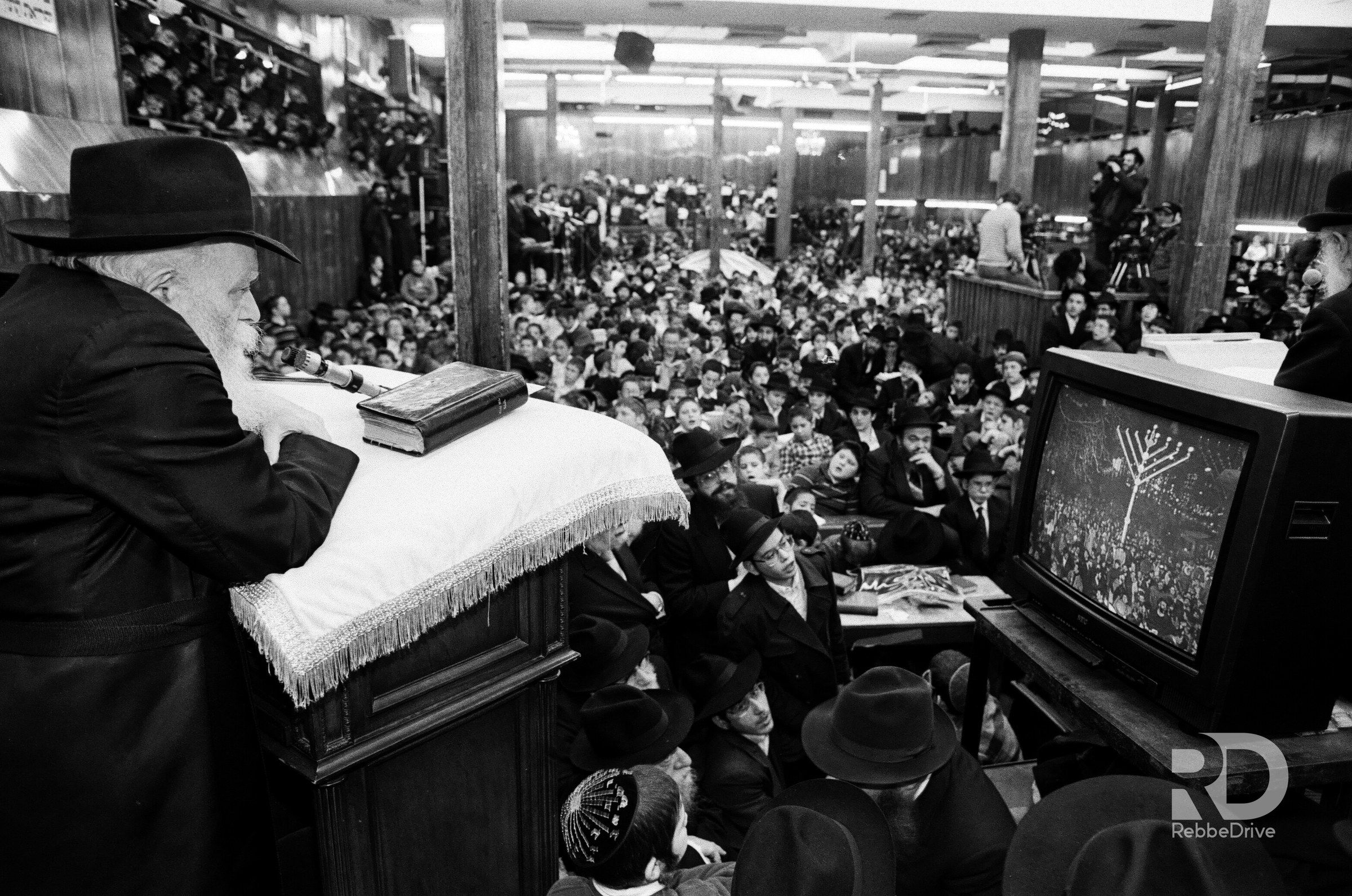
In the autumn of 5734, 1973, Reb Saadya Maatuf was a young student from the Land of Israel learning in 770 Eastern Parkway, the Rebbe’s synagogue and headquarters in Brooklyn. Every day he wrote down what he saw. The Yom Kippur War had ended only weeks before. That Kislev, the Rebbe Melech HaMoshiach set in motion something new: a campaign to put a Chanukah menorah in the hands of every Jew.
Yud-Tes Kislev
The days leading up to the 19th of Kislev, the “New Year of Chassidus,” marking the Alter Rebbe’s release from prison, were days of waiting. Again and again the students hoped for a farbrengen, a Chassidic gathering with the Rebbe, and again and again they were disappointed. Students came in from the yeshivos in Morristown and Ocean Parkway and stayed on, just in case.
On the 18th the crowd was as dense as in the month of Tishrei. Places at the farbrengen were taken hours early, and more tables were added. The Rebbe came down at nine at night. His main subject was peace, and strengthening the spirit of the soldiers with spiritual weapons. He signalled for niggunim, Chassidic melodies, one after another. Then he stood and clapped, and the students climbed onto the tables for joy. He motioned for whistling, and everyone who could whistle did, Saadya until his mouth hurt. It ended at two in the morning. Outside it was raining, and the crowd stood in the rain singing until the Rebbe’s car pulled away.
A menorah for every soldier
That Shabbos, at the next farbrengen, the Rebbe gave instructions. Every soldier should receive a Chanukah menorah. Every army base should have a tzedakah box. The children should be gathered and told about the miracles of Chanukah. And the soldiers should be given Chanukah gelt. If money was lacking, the Rebbe said, he was ready to give it himself.
At the farbrengen he gave pieces of his cake to Rabbi Dovid Raskin, and told him to call a meeting to organise the distribution of menorahs to all the Israelis in America, and to every Jew, whoever he might be. The talks ran so long that the students ate their “Shabbos meal” only after Shabbos had ended. That same night the Lubavitch Youth Organisation met to plan the campaign, and shared out the Rebbe’s cake and l’chaim.
The next night, as the Rebbe was leaving to go home, he met Rabbi Shlomo Cunin, the shliach in California, and asked whether he was taking menorahs with him. Five hundred, said Rabbi Cunin. Why not a thousand? asked the Rebbe. The rest, Rabbi Cunin explained, would be coming in the mail. Good, the Rebbe said. That way the miracle would be publicised to the postal workers too.
Saadya heard another exchange the next morning. When the Rebbe’s secretary, Rabbi Leibel Groner, had asked where they could possibly buy so many menorahs, the Rebbe had answered simply: “From Japan.” The students and Rabbi Raskin were now discussing how one actually imports menorahs from Japan. A Lubavitcher who owned a factory had dropped all his other work to make menorahs, and the Rebbe had given him a special blessing.
Erev Chanukah
On the day before Chanukah, most of the American students went out in the morning to hand out menorahs. The Israelis were told to stay and learn, until one of them came back reporting that more hands were needed, and that menorahs were already running short. On the following days, the Israelis went out too.
At Mincha, the afternoon prayer, the Rebbe turned toward the menorah before Aleinu, and Rabbi Itche Churgin said the blessings and lit. As the crowd sang Haneiros Halalu, the Rebbe said the words through once, without the repetitions of the tune, his lips moving and his foot tapping the beat, looking from the menorah to the people and back. When the singing ended, he nodded, and they went on singing a little longer, until he turned around and they stopped at once. On his way out he began the niggun “Nyet, Nyet,” and waved to a small boy standing with his father, Rabbi Ezra Shochet, in the front row. The boy smiled. The students danced.
The children
On the first day of Chanukah, before Mincha, the boys of the Oholei Torah school came with the little children of the preschools. When the Rebbe came in there was complete silence. One of the schoolboys lit the menorah, and everyone sang. Some people kept snapping photographs, until the Rebbe put his hand over his face, and they stopped. At the words al nisecha, “for Your miracles,” the Rebbe waved his hand and clapped, and the room filled with joy.
After the prayers the Rebbe asked whether the children had received their Chanukah gelt. They were about to, he was told. Each child received two dimes, one for tzedakah and one for Chanukah gelt, and the Rebbe stood and watched until the last one had his. Meanwhile he looked over at some of the fathers who had come without their sons, and gestured, as if to ask: and where is the boy?
That night Saadya went out to Queens with menorahs, candles and the Rebbe’s Chanukah letter.
The open door
On Friday, Mincha was moved earlier so the lights could be lit in time, and since the day was short, Haneiros Halalu was said rather than sung. On Shabbos Chanukah the Rebbe spoke again, at length, about making sure every Jew could light. On Sunday, as they sang Haneiros Halalu, the Rebbe opened the door of the small study hall, it seemed so that people outside could see the lights too, to spread word of the miracle.
That night, after the evening study of Chassidus, the students got their own Chanukah gelt: a dollar each from Rabbi Raskin, and a dime for tzedakah.
Silver dollars
On Rosh Chodesh Teves, as the Rebbe left the main synagogue after the morning prayers, the Shochet children were standing outside. The family had just arrived from the Land of Israel to settle in America. The Rebbe asked them, in Yiddish, whether they had received Chanukah gelt. They did not understand. He asked again, in Hebrew, and still they said nothing.
“Teikef tekablu,” the Rebbe said, “you will get it right away.” He went into his room, came back, and gave each of them a silver dollar.
Sources
- From the diary of Reb Saadya Maatuf, edited by S.Z. Berger, Beis Moshiach, no. 1096 (December 5, 2017), Chanuka Alight with the Rebbe.
Retold from the diary of Reb Saadya Maatuf, published in Beis Moshiach, no. 1096.
More Chanukah stories
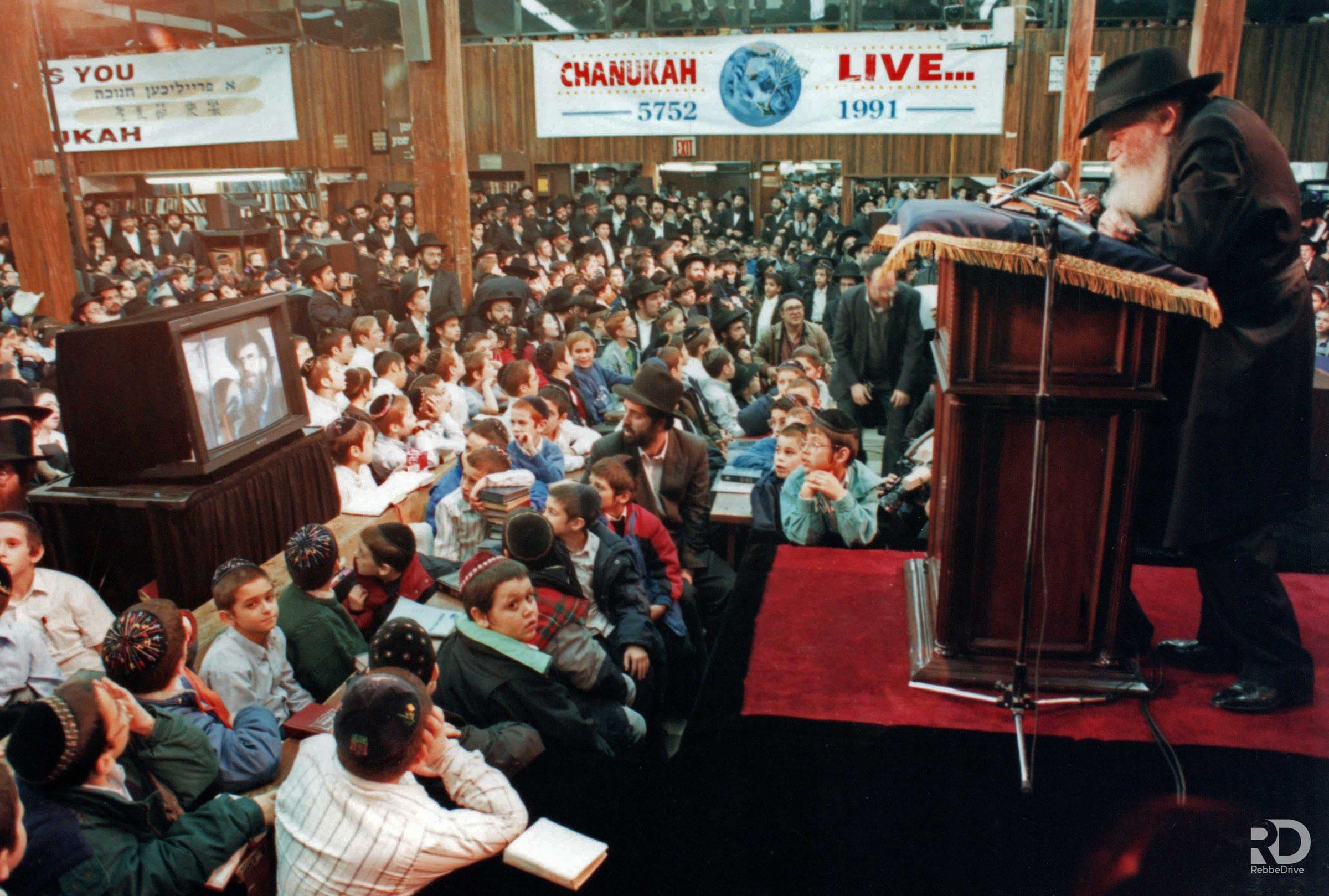
The Rebbe's Chanukah Campaign
Why the Rebbe Melech HaMoshiach set out to bring a menorah into every Jewish home and into the public square, what he asked of every Jew during Chanukah, and how the campaign connects with the Geulah.
The Fifth Night of Chanukah
Three times over forty years, the Rebbe told the same man why the fifth Chanukah light is special. The fourth time, he saw it burning in a London living room.
Chanukah in Tehran
In 5740, with American hostages held in the embassy in Tehran, Rabbi Avraham Mordechai Hershberg travels to Iran. The Rebbe tells him he will surely light a menorah there.
Chanukah Gelt
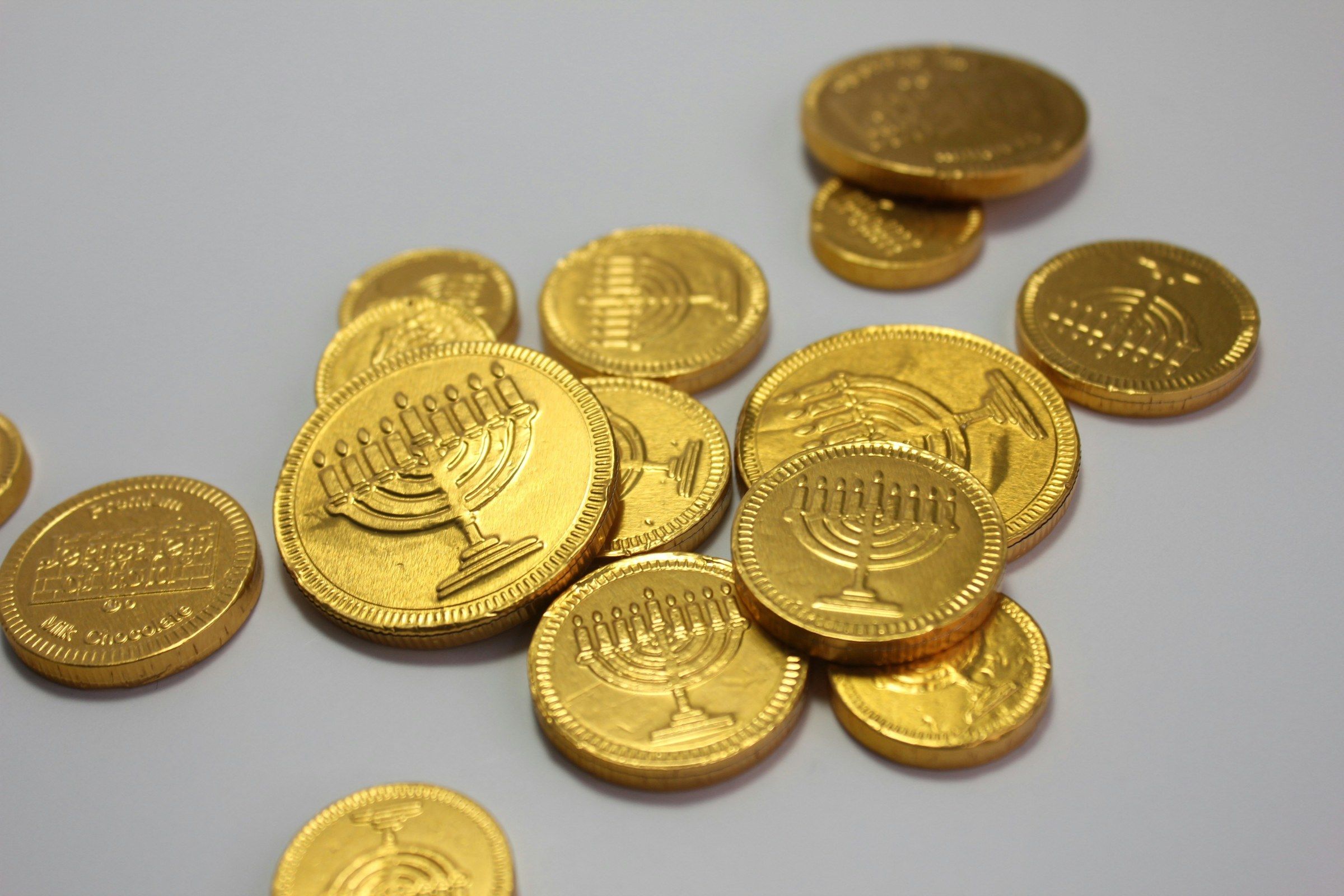
The custom of giving children money on Chanukah: its reasons, when and how the Rebbe encouraged giving it, coins or notes, tzedakah, and the Shabbos dates this year.