The Rebbe's Chanukah Campaign
Why the Rebbe Melech HaMoshiach set out to bring a menorah into every Jewish home and into the public square, what he asked of every Jew during Chanukah, and how the campaign connects with the Geulah.
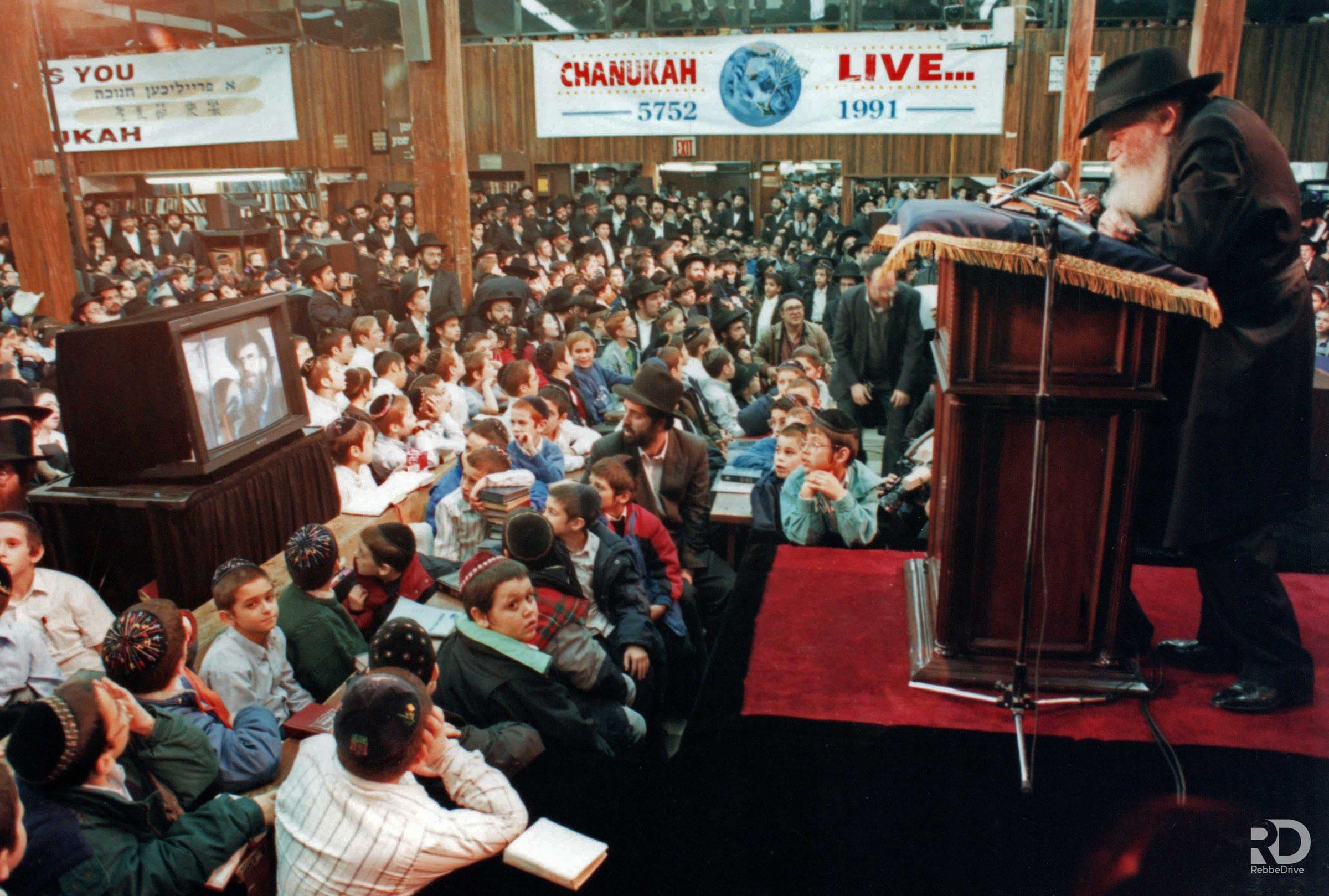
The Chanukah lights are meant to be seen. The Sages placed them at the door of the house, facing the street, at the hour when people were passing, so that the miracle would be known. The Rebbe Melech HaMoshiach took that purpose, pirsumei nisa, publicizing the miracle, and made it a campaign: mivtza Chanukah, to bring the light of the menorah into every Jewish home and out into the public square.
Every Jewish home
The heart of the campaign is simple. Every effort should be made, the Badatz of Crown Heights writes summarizing the Rebbe’s directives, so that a menorah is lit in every Jewish household, and that men and boys, even very young children, light their own. Menorahs are given out in streets, offices and shops, and the aim, the guide stresses, is that people take them home and light them there, not only in the place of business.
The Rebbe asked that this be done with the same care we give our own lighting. On Motzei Shabbos Vayeishev 5739 he said that just as we prepare our own menorah in advance on the day before Chanukah, so as not to be late, how much more must we, out of love for a fellow Jew, think ahead so that others can light exactly as we do, kemocha, “like yourself.” It is wrong, he said, to reason that if we miss someone on the first night there is always the second or third, or that it is enough if he lights before midnight. Such an approach, in the Rebbe’s words as the Badatz guide quotes them, “is entirely misplaced and misguided regarding any of the mitzvos, and certainly for the mitzvah of the Chanukah lights.”
The menorah in public
The campaign also brought large menorahs into city squares. The Rebbe pointed out in a letter that public menorahs had been lit in the nation’s capital, in Lafayette Park facing the White House, and in Manhattan, Albany, Philadelphia, Chicago and many other cities, with the President himself taking part in Washington.
When some Jewish communities objected, the Rebbe answered them at length. Why does a public menorah matter? Because experience had shown, he wrote, that it “has been an inspiration to many, many Jews,” awakening a sense of identity with their people, and pride in being Jewish, and the realization that in a free country there is no reason to hide one’s Jewishness. “Jews are not in the proselytizing business,” he wrote; the menorah brings no converts, “but it can, and does, bring many Jews back to their Jewish roots.” He knew personally of scores of such returnees, and believed there were thousands whose inner Jewish spark had been kindled by a public menorah in their city. Jews, he concluded, should never give the impression that they are ashamed of their Jewishness.
Public lightings come with a reminder: no one fulfils the mitzvah at a public menorah. Every participant must light at home, and it is best to announce this clearly.
What the Rebbe asked of every Jew
The Rebbe’s directives for Chanukah, collected from his talks in the late 5740s and early 5750s, reach well beyond the lighting itself:
- Start with the outside. On the very first night, when only one light is lit, it must already be placed to light up the outside. The Chanukah lights teach that the work of spreading light does not wait until one’s own home is perfect.
- A golden menorah. Explain to every Jew, whoever and wherever he is, that he is part of the “golden menorah,” and should stand tall and proud of his Jewishness.
- Women and the home. Explain the meaning of Chanukah to women in a way that touches their central role in the home, since the miracle came about mainly through a woman.
- Children. Educate sons and daughters even before bar and bas mitzvah in the customs of Chanukah, including Chanukah gelt.
- The whole world. Use the inspiration of Chanukah to encourage non-Jews too in keeping the Seven Noahide Laws.
- Farbrengens. Hold joyful gatherings on every day of Chanukah, under whatever name suits the place, with words of Torah and good resolutions, and above all, to publicize the miracles happening today.
- The shul menorah. In 5750 the Rebbe suggested keeping the menorah lit in shul around the clock, where there is no danger of children playing with fire.
Eight: beyond the ordinary
In a letter to a supporter of a building project in Yerushalayim announced during Chanukah, the Rebbe explained why he called it a “wild” project. The menorah of the Beis Hamikdash had seven lamps, like the seven days of the natural week. The Chanukah menorah has eight, because Chanukah recalls an extraordinary situation that called for an extraordinary response, self-sacrifice beyond calculation. The present situation, the Rebbe wrote, is extraordinary too, and ordinary means will not do. He ended with the wish that in the merit of the eight Chanukah lights we should all see “the Lights of Zion in the third and eternal Beis Hamikdash, at the complete and true Geulah through our righteous Moshiach.”
Toward the Geulah
The Rebbe tied the campaign directly to the Redemption. On Shabbos Vayeishev 5752 he said that since all that was required has already been accomplished and the Redemption has not yet come, it is especially fitting to “publicize the miracle”: to make known the miracles Hashem does for us, with the understanding that this brings the true and complete Redemption. Chanukah, whose whole purpose is publicizing miracles, is the time to step this up. The directives of those years end with the call of the Previous Rebbe, “Stand ready, all of you,” for the coming of Moshiach, with the eight days of Chanukah as a time to spread that readiness to the whole Jewish people.
The Rebbe also looked ahead to the menorah of the future. In 5751 he asked who will light the great Chanukah menorah in the Third Beis Hamikdash, and suggested it may be Aharon HaKohen himself. In the days of Moshiach, he taught, our own menorahs will again be lit outside, in full view of everyone.
Sources
- Sichos in English / L'Chaim, Chanukah: Menorahs in Public Places (a letter of the Rebbe).
- Sichos in English / L'Chaim, Chanukah: A 'Wild' Project (a letter of the Rebbe).
- Living With Moshiach (Torah4Blind), Chanukah 5763: horaos of the Rebbe (Hebrew).
- Rabbi Yosef Yeshaya Braun, Badatz of Crown Heights, Day-to-Day Halachic Guide: Chanukah 5786.
- AskTheRav, chanukah mivtzoyim (question archive).
- Rabbi Y.Y. Shagalov, Living With Moshiach, Your Chanukah Guide (Living With Moshiach, Vayeishev 5760).
Based on letters and sichos of the Rebbe, via Sichos in English, Living With Moshiach and the Badatz of Crown Heights guide.
Related
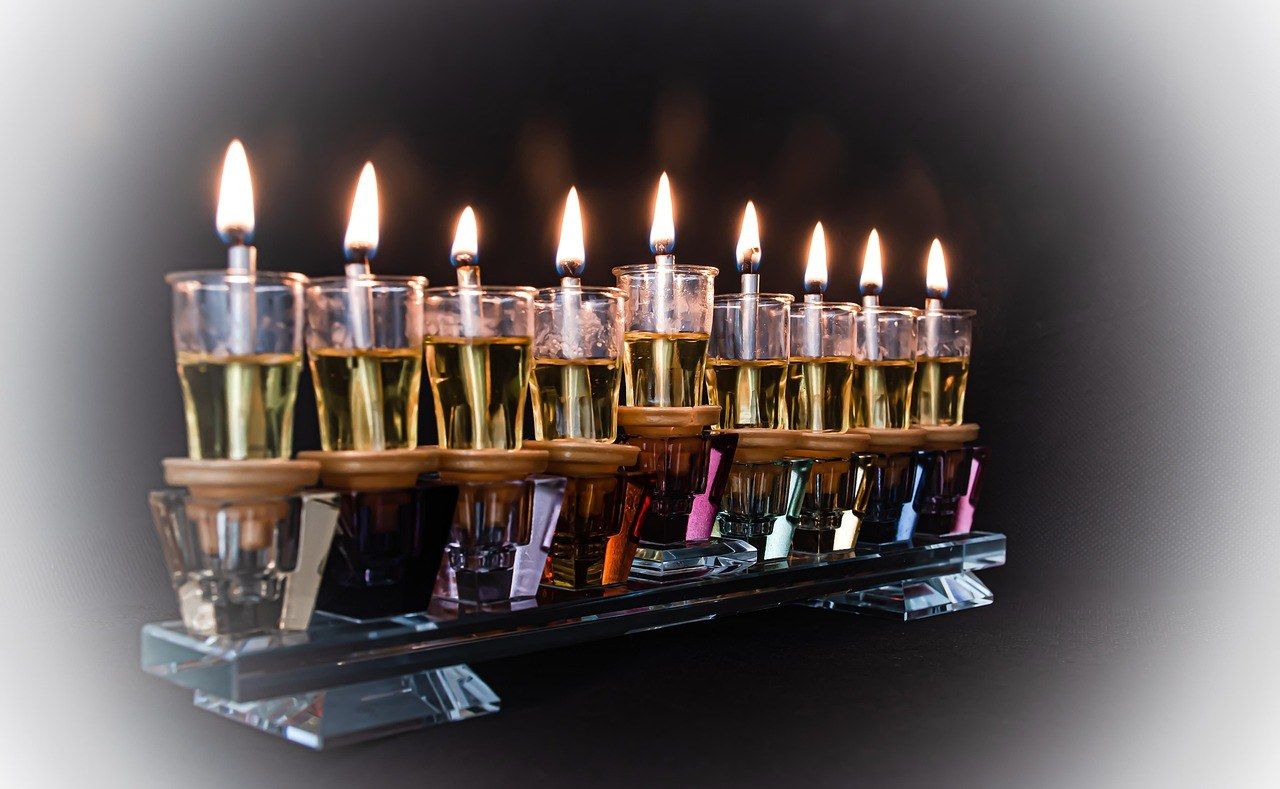
How to Celebrate Chanukah
The mitzvos and customs of the eight days: lighting the menorah, the added prayers, gelt, tzedakah, festive meals, fried foods and dreidel, with this year's dates.
Letters from the Rebbe
Five Chanukah letters of the Rebbe, from 1948 to 1975, on self-sacrifice, lighting up the outside, the raised shamash and the lights we add each night.
Sichos in EnglishThe Menorah in Union Square
A San Francisco lawyer who has not lit a menorah in fifteen years takes his daughter to a public lighting in Union Square. A hostile stranger pushes toward the torch.
The Menorah in the Beis Hamikdash
The golden menorah of the Holy Temple: how it was made, how it was lit, why its branches were straight, how the Arch of Titus misled the world, and the menorah of the Third Beis Hamikdash.
Chanukah and Moshiach
Moshiach is never named in the Chanukah story, its blessings or its prayers. Scratch the surface, though, and every part of it points to him: the battles, the rededicated Beis Hamikdash, the lit Menorah and the number eight.
L'Chaim (Sichos in English)