Letters from the Rebbe
Five Chanukah letters of the Rebbe, from 1948 to 1975, on self-sacrifice, lighting up the outside, the raised shamash and the lights we add each night.
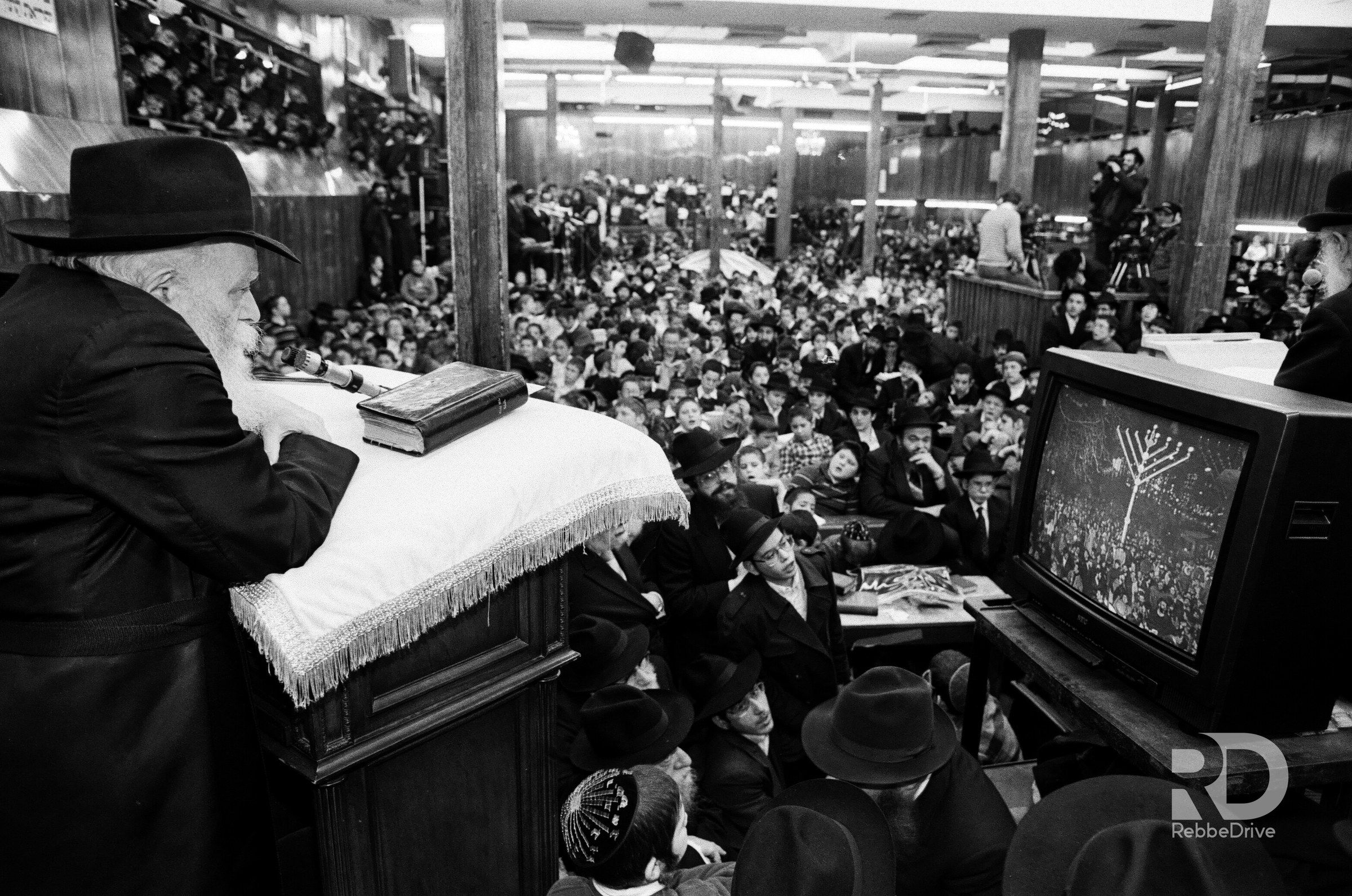
Each year as Chanukah drew near, the Rebbe Melech HaMoshiach wrote to communities, schools and individuals around the world. Some letters were general greetings for the festival; others answered a question or a report of activities. Read together, they return again and again to a few clear lessons drawn from the lights themselves. Here are five of them, in the English translation published by Sichos in English.
The fifth light, 5709 (1948)
In one of his early letters, written on the fifth night of Chanukah 5709, the Rebbe points to the two miracles of Chanukah: the Maccabees’ victory on the battlefield, and the oil that burned at the rededication of the Beis Hamikdash. The victory is remembered in a prayer said privately; the oil, in lights set out for public display.
The difference, he writes, is a lesson in itself. The victory was miraculous, but material. The oil allowed the Jewish people to keep the mitzvah of lighting the Menorah in the rededicated Beis Hamikdash. So too in the life of each person: “The material must be subordinated to the spiritual; the body to the soul.” The soul, “G-d’s candle,” fulfils its purpose by spreading the light of Torah and mitzvos all around it.
Chanukah and self-sacrifice, 5721 (1960)
Writing to the annual celebration of the Lubavitch yeshivah Achei Temimim in Massachusetts, the Rebbe describes Chanukah as the memory of a time when a ruthless enemy tried to stamp out the Torah, and a handful of faithful Jews, ready for real self-sacrifice, turned the tide.
He then turns to his readers’ own situation. In a country with freedom of worship, no one has to risk his life to learn Torah. Yet the number of children receiving a full Jewish education was still far from enough. The few, he writes, “are destined to rekindle the light of the Torah and mitzvot in the hearts and homes of many.” For that, something of the mesirus nefesh, the self-sacrifice of the Chashmona’im, is still needed. He asks them to support the yeshivah “in an ever-growing measure, as symbolized by the candles of Chanuka which we light each day of Chanuka in steadily growing numbers.”
The raised shamash, 5723 (1963)
A short letter written on 4 Shevat 5723 answers a small detail. Someone had sent the Rebbe a sketch of a menorah, and he notes that the custom is for the shamash, the helper candle used to light the others, to stand higher than the row of lights.
He gives two reasons. The simple one is the law: we may not make use of the Chanukah lights, because they are holy, so the shamash is set apart and placed prominently. The deeper, Chassidic reason is that one who lights up another person’s soul, “the soul of man which is the candle of G-d,” gains a merit higher still than that of the person whose soul he lit.
Three lessons of the lights, 20 Kislev 5732 (1971)
Written in the days between Yud-Tes Kislev, the “New Year of Chassidus,” and Chanukah, this letter asks every reader to spread “the fountains” of Torah, and of its inner dimension in particular, ever more widely. The lights, the Rebbe writes, show three basic parts of that work:
- to spread the light of Torah and mitzvos more each day, as a light is added each night;
- to spread it beyond one’s own home, since the original place of the Chanukah lights is “at the entrance of his home, outside”;
- and not to lose heart when it is dark outside, for “that is precisely the time to start kindling the lights,” as the Chanukah lights are lit after sunset.
To light up the outside, 20 Kislev 5736 (1975)
Replying to a report from a women’s organisation, the Rebbe notes the special part women played in the Chanukah story. The Sages say women “too were involved in that miracle,” and Rashi explains that a woman brought it about.
He reminds his readers that the festivals we keep year after year are not only a remembrance; they are meant to change daily life in practical ways. Chanukah teaches that a Jew is never discouraged at being “weak” and “few” against the “mighty” and “many.” The Chanukah lights are lit after dark and placed so that they shine outside. And one light is never enough: even after adding a light on the second night, the next night calls for one more, and so through the whole week.
The message, he writes, is clear. Especially in our time, light must be spread in the same growing way, “to light up one’s personal life, and to light up the home and the street,” so that those who walk in darkness see the light of Torah and mitzvos and light up their own lives in turn.
Sources
- Sichos in English, Chanukah: Chanuka And Self-Sacrifice.
- Sichos in English, Chanukah: To Illuminate The Outside.
- Sichos in English, Chanukah: The Elevated Shamash.
- Sichos in English, Chanukah: The Message of Chanukah.
- Sichos in English, Chanukah: Celebrating Two Miracles.
Letters of the Rebbe in the English translation published by Sichos in English, summarised with short quotations.
Related
Why Do We Celebrate the Miracle of the Oil?
Chanukah had two miracles, a victory in battle and the oil that burned eight days. The Sages built the festival around the oil. The Rebbe explains why, and what it says about body and soul.
Sichos in EnglishThe Meaning of the Chanukah Lights
The Previous Rebbe told his Chassidim to listen to what the candles are saying. The Rebbe reads their message in the laws of the mitzvah: light the dark outside, use none of it, and add more every night.
Sichos in English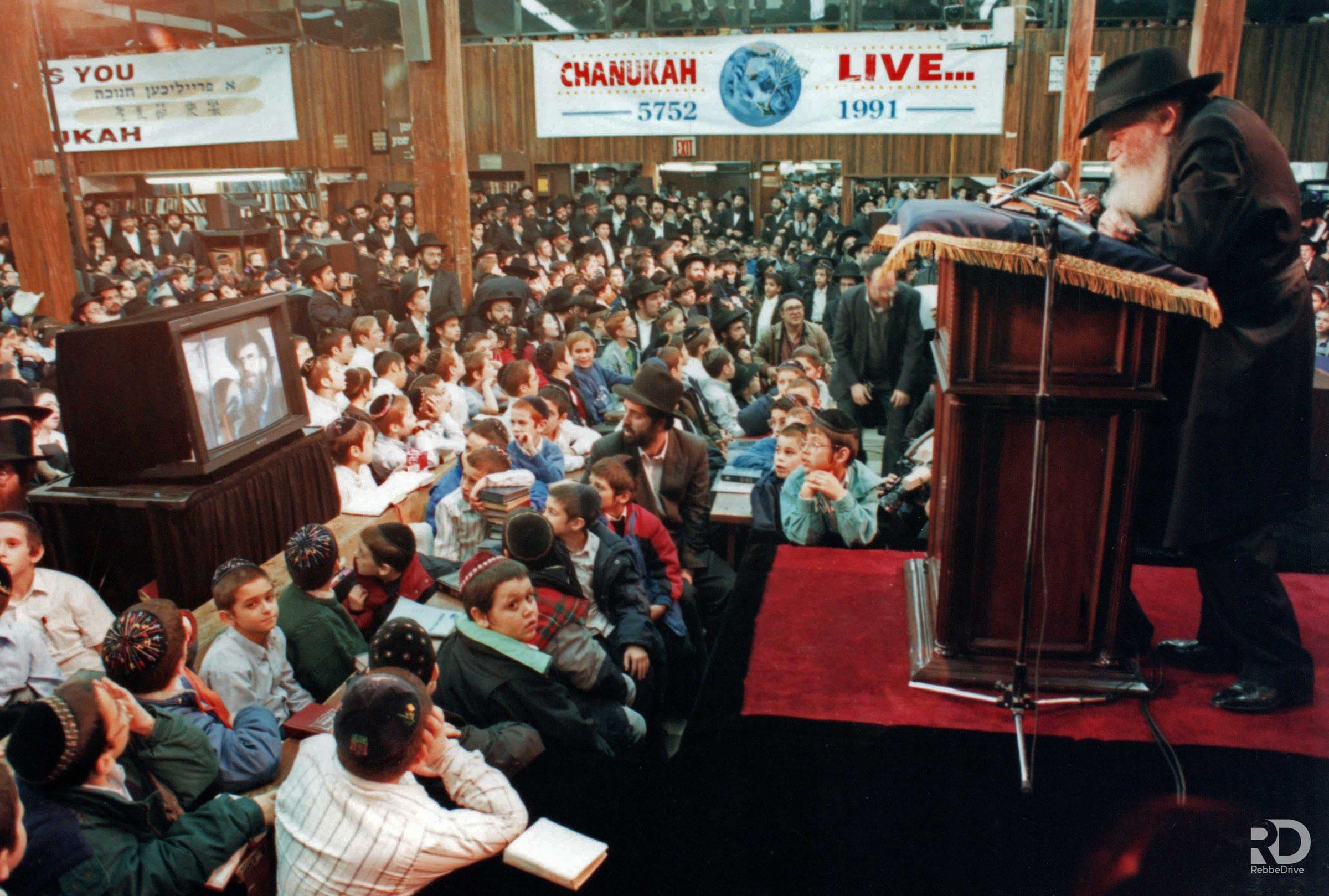
The Rebbe's Chanukah Campaign
Why the Rebbe Melech HaMoshiach set out to bring a menorah into every Jewish home and into the public square, what he asked of every Jew during Chanukah, and how the campaign connects with the Geulah.
How to Light the Menorah
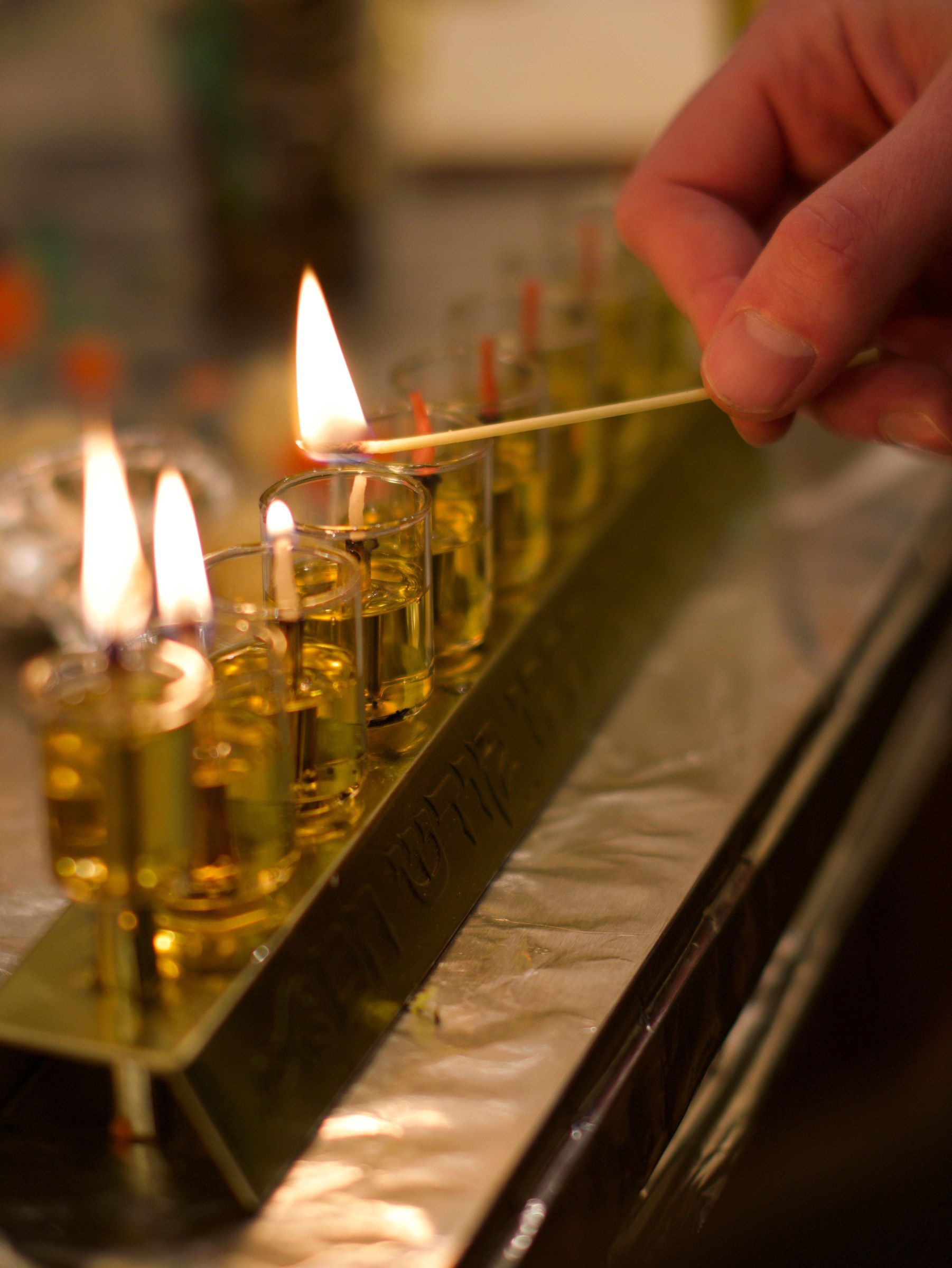
A step-by-step guide to lighting the Chanukah menorah: what you need, where to place it, when to light, the blessings, the order of the lights, and Friday and Saturday night.