Chanukah Stories from A Place Called Prison
For seven Chanukahs Reb Sholom Mordechai Rubashkin lit the menorah behind bars, fighting each year to light it properly. On the eighth day of Chanukah 5778, a guard opened his cell.
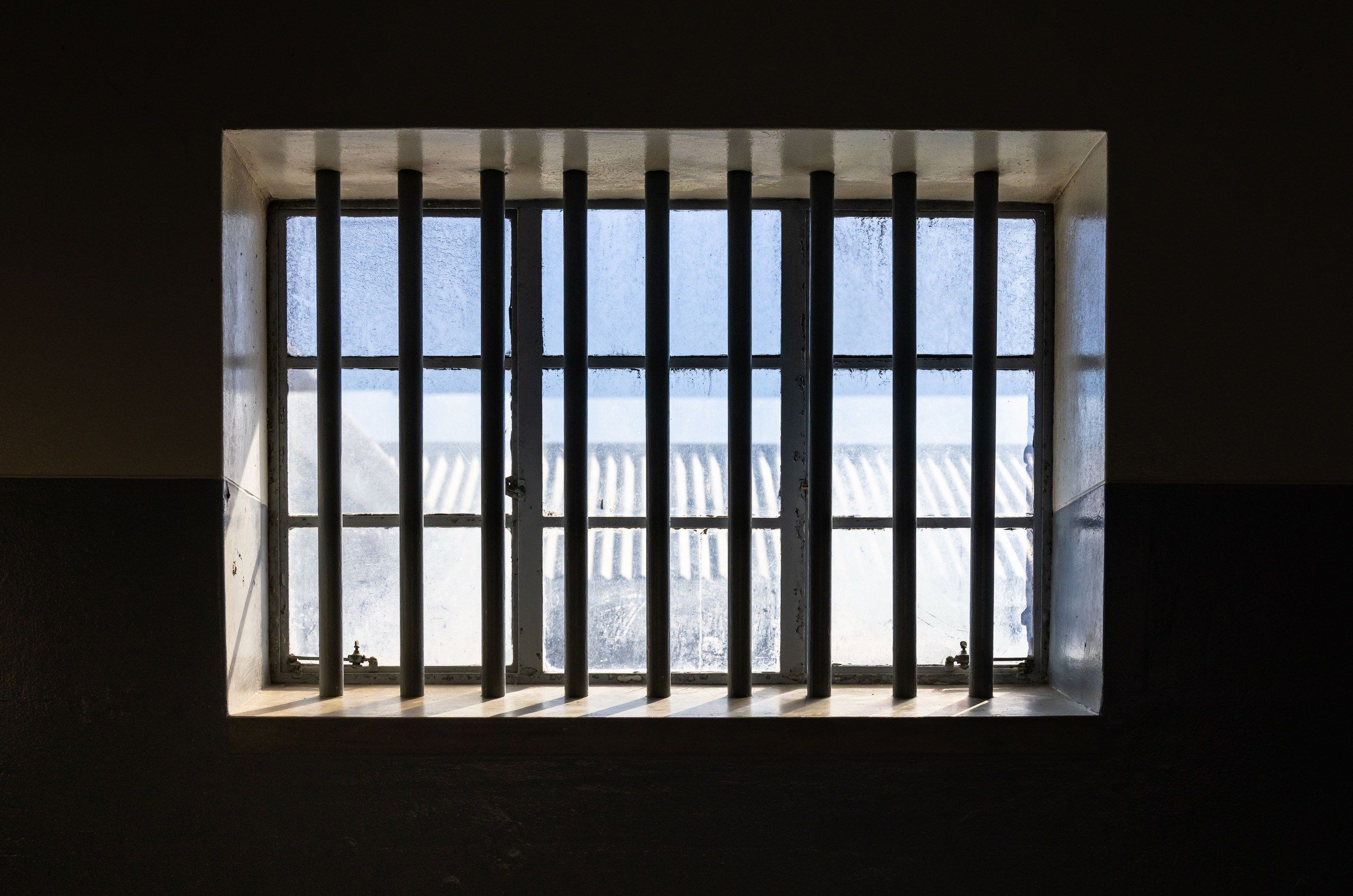
For seven and a half years, Reb Sholom Mordechai Rubashkin lived in what he called “a place called prison.” In his book The Inside Story he tells, among much else, of his Chanukahs there. In each of them, the menorah was a battle.
The first Chanukah
His first Chanukah behind bars was in a county jail in Dubuque, Iowa. He fully expected to be freed by a miracle at any moment. But the Torah does not let a Jew wait for miracles before doing a mitzvah, so he set about arranging to light.
He asked his family to contact the Aleph Institute, the organisation that looks after the religious needs of Jews in prisons and in the military, and in particular its director of prison outreach, Rabbi Mendy Katz, who would become a constant presence through all his years inside. He wanted permission to light with olive oil, the finest way to keep the mitzvah and the way he always had.
Aleph promised to fight for it, but warned him not to hope for much. Even permission to light at all would be hard. Olive oil had never been allowed in a prison. A few days later the answer came: no lights at all. The warden, who had been very accommodating about his religious needs until now, was deferring to the fire marshal.
Reb Sholom Mordechai suspected that the warden was picturing something far bigger than a menorah. Through Aleph he arranged a visit from Rabbi Kalmanson, a Chabad shliach and prison chaplain in the Midwest, who showed the warden the small pre-filled oil cups and explain that the flames were tiny and would be watched the whole time. It worked. The warden changed his mind about the menorah, and about the olive oil, and even found a fireproof room for the lighting.
The Midrash tells, he writes, that as Avraham and Yitzchak went to the Akeidah, the Satan put a river in their path. Instead of concluding that the mitzvah was impossible, Avraham concluded that the river was impossible. They walked on, the water rose to their necks, and then it vanished as if it had never been. An obstacle to a mitzvah is a test. Push through, and the river disappears. That year, it turned out, there were several rivers.
Rivers
An hour and a half before lighting on the first night, a guard came in with bad news. The warden had left for the holidays, and the menorah and oil cups were locked in his office. Could the warden be called back? The guards burst out laughing. To them it was like calling the President back to the Oval Office because an intern had left his keys there.
He prayed, and called his family. He never found out what, if anything, was done on the outside. Not long afterward, the guard returned: the warden had come back to the jail to open his office. The guards could hardly believe it.
Two men led him through a maze of corridors to a large concrete cell with no windows and benches along the walls. In the corner stood a low partition. The guard set the menorah on it with a flourish. “Go ahead. Do your thing.”
Full of joy, he placed the first oil cup, took up the shamash and the matches, and was about to strike one when he glanced down. Behind the partition was a toilet.
He could not say a blessing with G-d’s Name there, or light holy lights to shine over it. “I can’t light here,” he told the guard, as gently as he could. “These are holy lights. They proclaim the miracles G-d did for His people. Should they proclaim them over a toilet?” The guard could have reminded him who wore the orange jumpsuit. Instead he asked, “So what should I do?”
There was a small side room where Reb Sholom Mordechai prayed and ate his kosher meals each day. Could he light there, and sit by the lights to make sure they were safe? It was a holiday; there was no one to sign off on a change. The two guards talked it over. Then the officer picked up the menorah, the guard picked up the oil cups, and they led him out.
Walking down the corridor, he gathered his courage for one more request. Jewish law asks for the lights to burn half an hour, he explained, but the custom in his community was to sit by them at least fifty minutes. Could he?
The officer stopped. First the menorah, then the oil, then the toilet, now this. “Rubashkin,” he said, “just tell me. How did you do this in your home?”
Something twisted in his heart. At home, every night of Chanukah, he cleared his schedule and gathered his children around the menorah. They lit, sang, danced in front of the lights, and then sat at the table nearby with latkes and dreidels and talk of the festival until the lights burned out, two and a half hours later. It all came tumbling out. Most of it, he suspected, meant nothing to the officer. But the officer understood the main thing: at home, he sat by the lights until they went out.
After a long pause the officer said, “Okay. You’ll do it here the way you did it in your home.”
In those words he heard a message from Hashem. Away from home, under pressure, the natural thought is that this time a little less will do. No: be the same Jew here as at home. Every night that Chanukah, he lit in that small room and sat by the lights until the oil was gone. When the last flame went out, he banged on the heavy metal door, the noise ringing through the jail, one last proclamation of the miracle, and was taken back to his cell.
Lockdown
Later, in the federal prison at Otisville, menorahs were issued to every Jewish inmate: thin tin ones with little coloured candles that barely last the required half hour. He asked for an oil menorah and was given one. Over the years the other Jewish prisoners noticed that the oil burned longer, and that it was good to linger by its light, and one by one they switched to oil too.
One year, after the afternoon count, fog rolled in and the whole compound was locked down. No movement was allowed except a forty-minute release to the dining hall. He ran out at the release, found a senior officer and asked to spend those forty minutes in the chapel instead, lighting the menorah. The officer was listening only because he had to. Just then a chaplain walked by, joined in, and the officer gave permission.
The Jewish inmates prayed the evening service and lit their menorahs, and sat together by the lights. Twenty minutes in, the chaplain came back. Orders: everyone back to the barracks, now. Several men got up and left. He did not. The lights had not yet burned the minimum half hour, and the moment they left, they would be put out. He asked the chaplain to check whether the officer’s permission covered them. She was back in three minutes: no. Seven more minutes, he pleaded. Please ask once more. Reluctantly she called. She listened, looked surprised, and told them they could stay. The lights burned their full time.
Zos Chanukah 5778
On the day before Zos Chanukah, the last day of Chanukah, in 5778, his final appeal was denied. The highest court open to him had ruled that he would stay in prison for another eighteen years.
He was not crushed. He took it as a sign. When there is nothing left for a person to do, he reasoned, that is when Hashem acts alone. “Cast your burden on G-d, and He will sustain you.”
On the morning of Zos Chanukah, after prayers with a minyan, Hallel and the Torah reading, he went to the computer room to read his mail. Thousands of people had written to him over the years. One was a Jew in England he had never met, who always wrote at Chanukah. His note had been sent after the festival had ended in England: “My eight lights have just gone out and we are in darkness again, but very soon, long long long before next Chanukah, there should be a brilliant light in the world,” he wrote, when Sholom could go home to his family.
Reb Sholom Mordechai wrote back. In New York it was still Chanukah. The lights may have gone out, he told his friend, but their light stays with us all year, and it is the Chanukah lights that will bring the brilliant light you are hoping for.
Then he answered a bundle of letters from a class at the Vizhnitz Talmud Torah. One child had written in Yiddish: “Strengthen yourself with emunah! Hashem can help at the last minute. Don’t give up!” He wrote the class several pages, finished at about half past two, and, for no particular reason, decided to post it before the 3:30 lock-in instead of waiting for the evening mail.
Back in cell 307, alone, locked in for the hour-long count, he opened his Tehillim. “Please make the miracle today,” he prayed. “Zos Chanukah, the second of Teves. Beis, two, is for bitachon, trust, and I trust completely that You will free me today.” Before sunset he washed for a small Zos Chanukah meal of matzah and tuna.
He had barely begun to eat when the door swung open. That never happened. The guard always unlocked the cells one by one, and Reb Sholom Mordechai always heard the keys coming. This time the guard had come straight to him. “Rubashkin. Out.” Was it a search? Could he stay, since he had washed for a meal? No. “You’re changing your location.” He started down the stairs, stopped, ran back for his tallis and tefillin, and followed a silent escort past the dining hall to the officers’ building. The assistant warden, usually chatty, walked beside them without a word, glancing at him again and again.
In an office, the warden came in. For a few moments she and her assistant only looked at him, as if they did not know how to begin. Then she said: “Congratulations, Mr. Rubashkin.” Mister. He had not heard anyone in authority call him that in seven and a half years. “The President of the United States has granted your clemency petition. You are a free man. You can go home.”
“Hodu laShem ki tov, ki le’olam chasdo,” he cried out. “Give thanks to G-d, for He is good; His kindness is forever.”
Barely a day after the courts had declared the matter closed, on the last day of Chanukah, the festival of the few who prevail over the many, he walked out of the place called prison.
Sources
- Beis Moshiach Magazine, via Chabadinfo.com, Chanukah Stories from "A Place Called Prison".
Retold from Reb Sholom Mordechai Rubashkin's book The Inside Story, as excerpted in Beis Moshiach.
More Chanukah stories
The Meaning of Zos Chanukah
The eighth day of Chanukah is called Zos Chanukah, after the Torah reading of the day. Why it is the summit of the festival, and how its eight lights point to the Geulah.
HaGeula
Siberian Chanukah Lights
Reb Mordechai Chanzin spent 21 years in Soviet prisons and camps. One Chanukah, in a camp in the far north, he and seventeen young Jews lit a makeshift menorah, and were caught and tried. The judge had a request.
The Light in the Window
A band of partisans fleeing across a frozen border takes shelter in a guard's hut. The old rabbi they almost left behind lights his menorah in the window.
Olive Oil and Candles
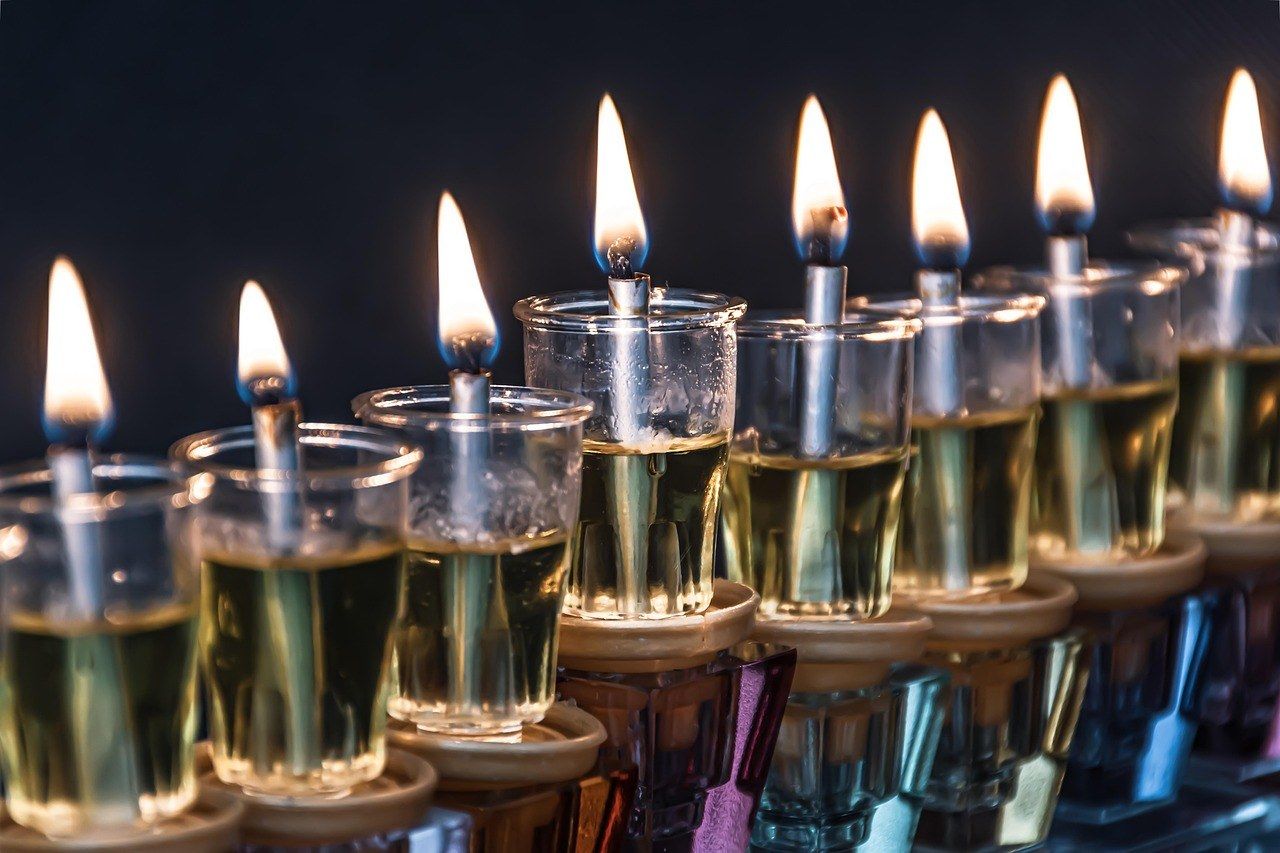
Which fuel and wicks to use for the Chanukah lights, why olive oil is best, how long the lights must burn, what to buy, and what to do with leftover oil after Chanukah.